
Congratulations to Wildlife Madagascar student researchers Giulia Sassoli and Aurelia Sebastiani from Sapienza University of Rome, who have published the results of their Master’s research in the International Journal of Primatology! Working at our La Mananara field site within the Anjozorobe-Angavo Protected Area, Giulia and Aurelia conducted the first comprehensive assessment of lemur population densities and habitat use in this understudied forest, generating valuable baseline data to guide future conservation and long-term monitoring efforts.

Wildlife Madagascar-affiliated authors on this publication also include Dr. Tim Eppley (Chief Conservation Officer), Dr. Jacques Rakotondranary (La Mananara Conservation Program Manager), Rojotiana N. Rakotoarisoa (Assistant Manager – La Mananara Site), and Wildlife Madagascar student researchers Davide Mirante, Hanitriniaina Raharinirina, Koloina Rakotoarivelo, Fanomezantsoa L. Ravololoniaina, Domohina S. Randrianarisoa, and Gabriele Ferraro, alongside their Malagasy collaborators. Dr. Luca Santini of Sapienza University of Rome is listed as the paper’s final author.
Investigating Lemur Habitat Selection and Population Density
Primates are among the most threatened mammal groups globally due to habitat loss and hunting pressure, and lemurs have the highest proportion of species at risk of extinction of any primate taxon. The Anjozorobe-Angavo Protected Area has received relatively little ecological attention and continues to experience deforestation.

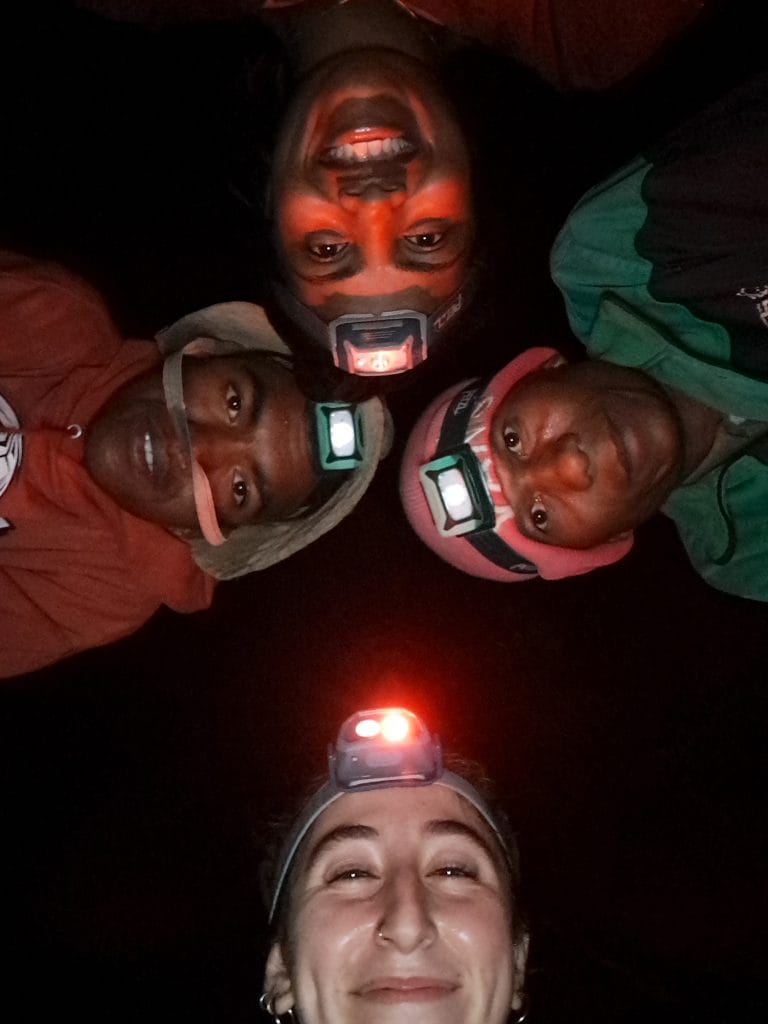
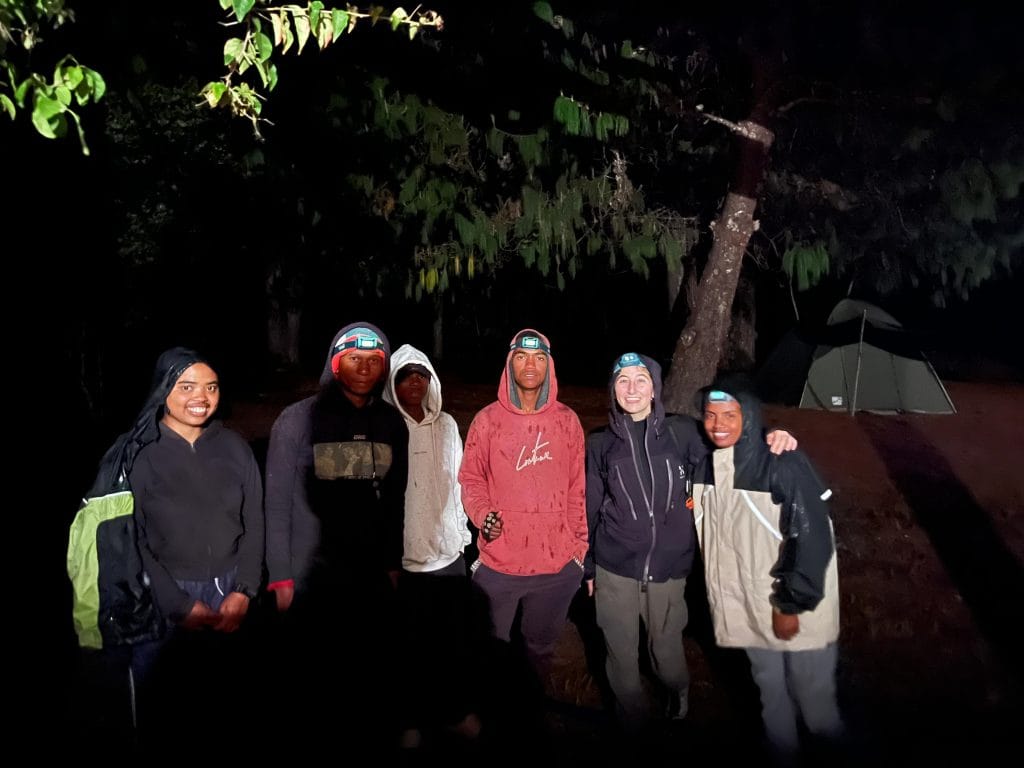
The study estimated population density and habitat selection of diurnal and nocturnal lemurs within La Mananara, a privately owned forest inside Anjozorobe-Angavo. Over three months of fieldwork between October and December 2024, Giulia, Aurelia, and the team conducted line-transect surveys (160 km total: 104 km diurnal, 56 km nocturnal), applying distance sampling to estimate abundance and establishing vegetation plots to model habitat associations.
Key Findings
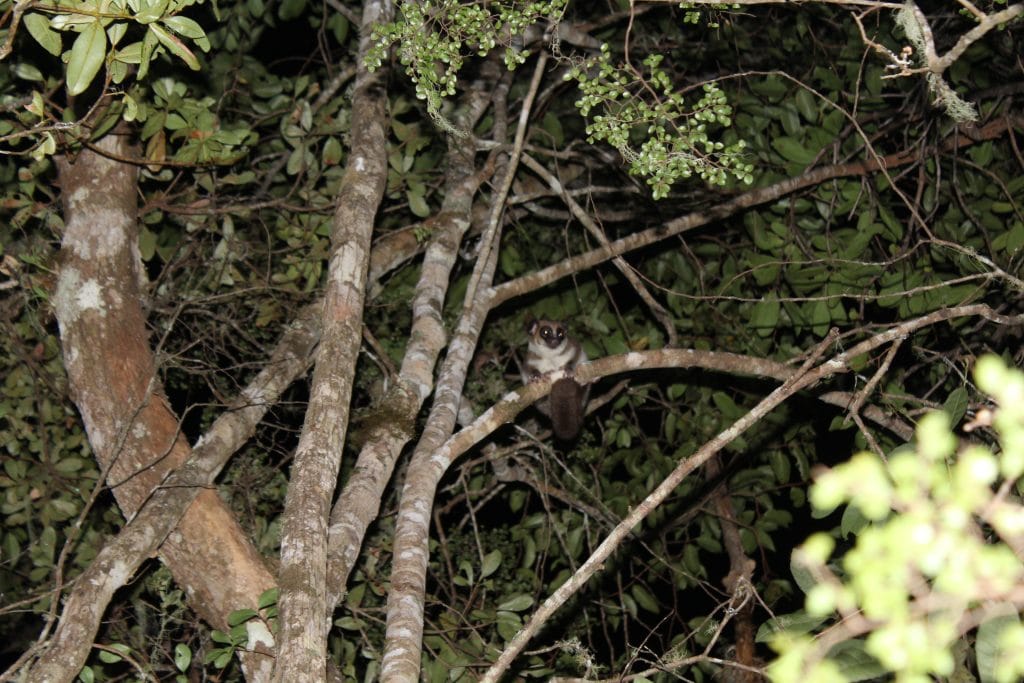
- The team documented ten lemur species — four diurnal/cathemeral (Eulemur fulvus, Propithecus diadema, Hapalemur griseus griseus, Indri indri) and six nocturnal (Microcebus lehilahytsara, Avahi laniger, Lepilemur mustelinus, and two Cheirogaleus species) — plus an indirect detection of the aye-aye (Daubentonia madagascariensis), confirmed via camera-trap photos and foraging signs.
- Nocturnal species were detected more often and at much higher densities than diurnal species; M. lehilahytsara and Cheirogaleus spp. exceeded previously published density ranges for the region.
- Diurnal species were less abundant overall and more strongly associated with greater canopy cover and lower human disturbance. Propithecus diadema, Critically Endangered on the IUCN Red List, was recorded at an unusually high density — an encouraging sign for the species at this site.
- Avahi laniger and Lepilemur mustelinus were more frequently detected near trails and rice paddies. The authors attribute this to lower hunting pressure on nocturnal lemurs and their ability to avoid humans temporally, rather than these areas being higher-quality habitat.
Implications of the Findings
Their findings highlight the importance of protecting mature forest, while also improving our understanding of how different lemur species respond to human disturbance — showing that edge and human-modified habitats can still support certain nocturnal species. These are the first quantitative density estimates for La Mananara, providing a baseline for future monitoring and contributing to broader lemur conservation assessments in this under-characterized landscape.
Congratulations to Giulia, Aurelia, and all of their Malagasy collaborators on this fantastic achievement! We are proud to support the next generation of conservation scientists in Madagascar.
Read the full study, “Habitat Selection and Population Density of Diurnal and Nocturnal Lemurs in the Anjozorobe-Angavo Protected Area, Madagascar,” in the International Journal of Primatology: link.springer.com/article/10.1007/s10764-026-00570-1