
The Stories Behind the Numbers
By Hannah Brown
I’ve always loved people, and I’ve always loved wild things.
After several field seasons assisting incredible mentors in different parts of Madagascar, I had the opportunity in 2026 to join the cohort of the Oxford Brookes Primate Conservation MRes program—a dream of mine for so long. I am a long-time conservationist and field researcher, but I’m also an artist and a storyteller. I was worried I would lose the second part of myself in all the writing and analysis. It’s definitely changing, but not in a bad way. Designing and conducting conservation-based dissertation research at Anjanaharibe-Sud Special Reserve (ASSR) gave me a new way to tell stories: through data. It’s weird, but stay with me on this one.
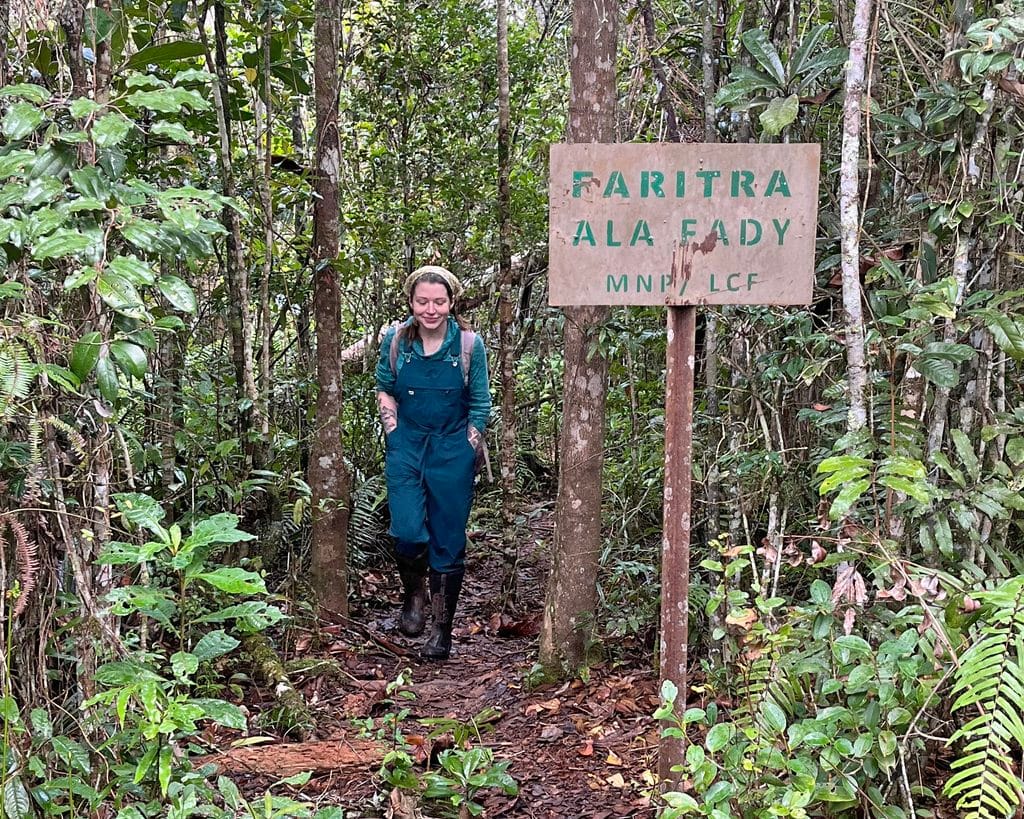
Entering the forest at Anjanaharibe-Sud Special Reserve, where three months of fieldwork became the
foundation of my MRes dissertation.
My dissertation focuses on lemur density and edge effects. I was incredibly lucky to be given access to lemur survey data collected at ASSR in 2016, allowing me to compare lemur densities across a 10-year period and ask whether the effects of the road that bisects the reserve have changed over time.
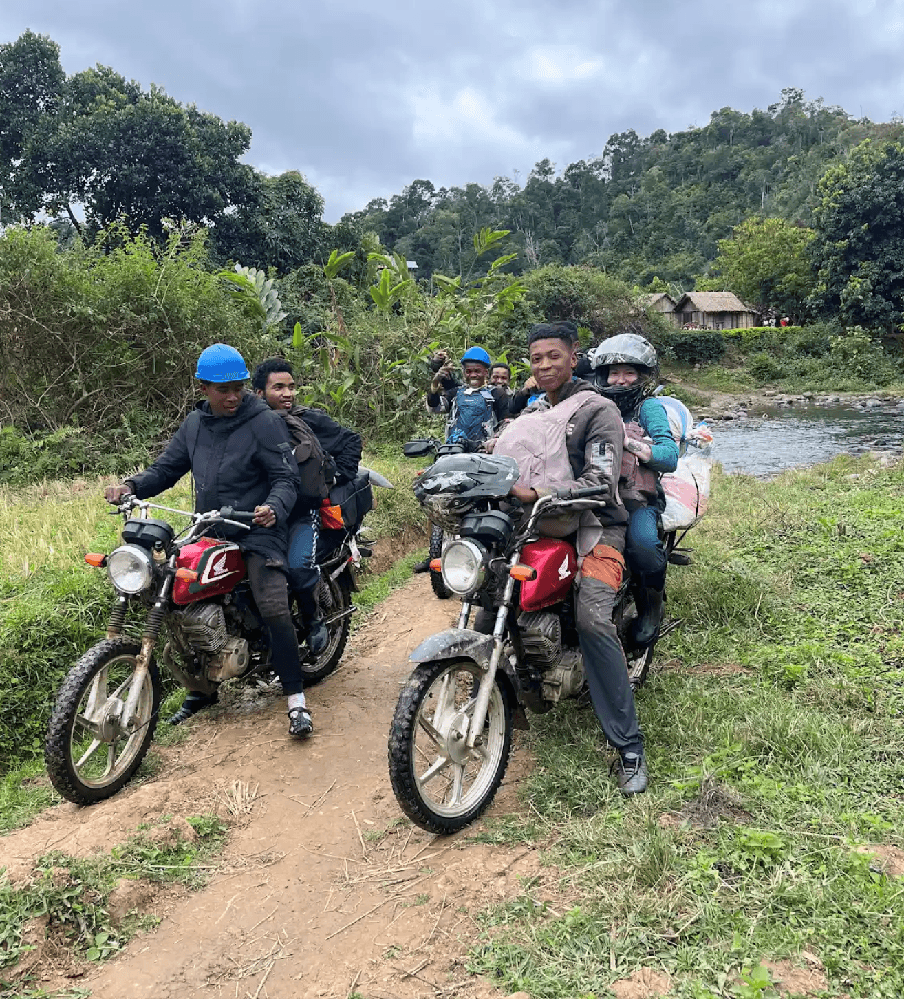
Fieldwork at ASSR begins long before the transect. Traveling with the team into the reserve and carrying everything we would need along the way.
To do this, my team spent three months conducting diurnal and nocturnal lemur surveys along transects at Camp Indri, collecting data on more than 2,000 lemur encounters. We then moved to Camp Varecia, a newer Wildlife Madagascar research site, where we conducted additional lemur surveys and point-centered quarter (PCQ) sampling. These data allow us to look not only at lemur encounters and densities, but also at the structure of the forest itself and how habitat characteristics may influence where lemurs are found.
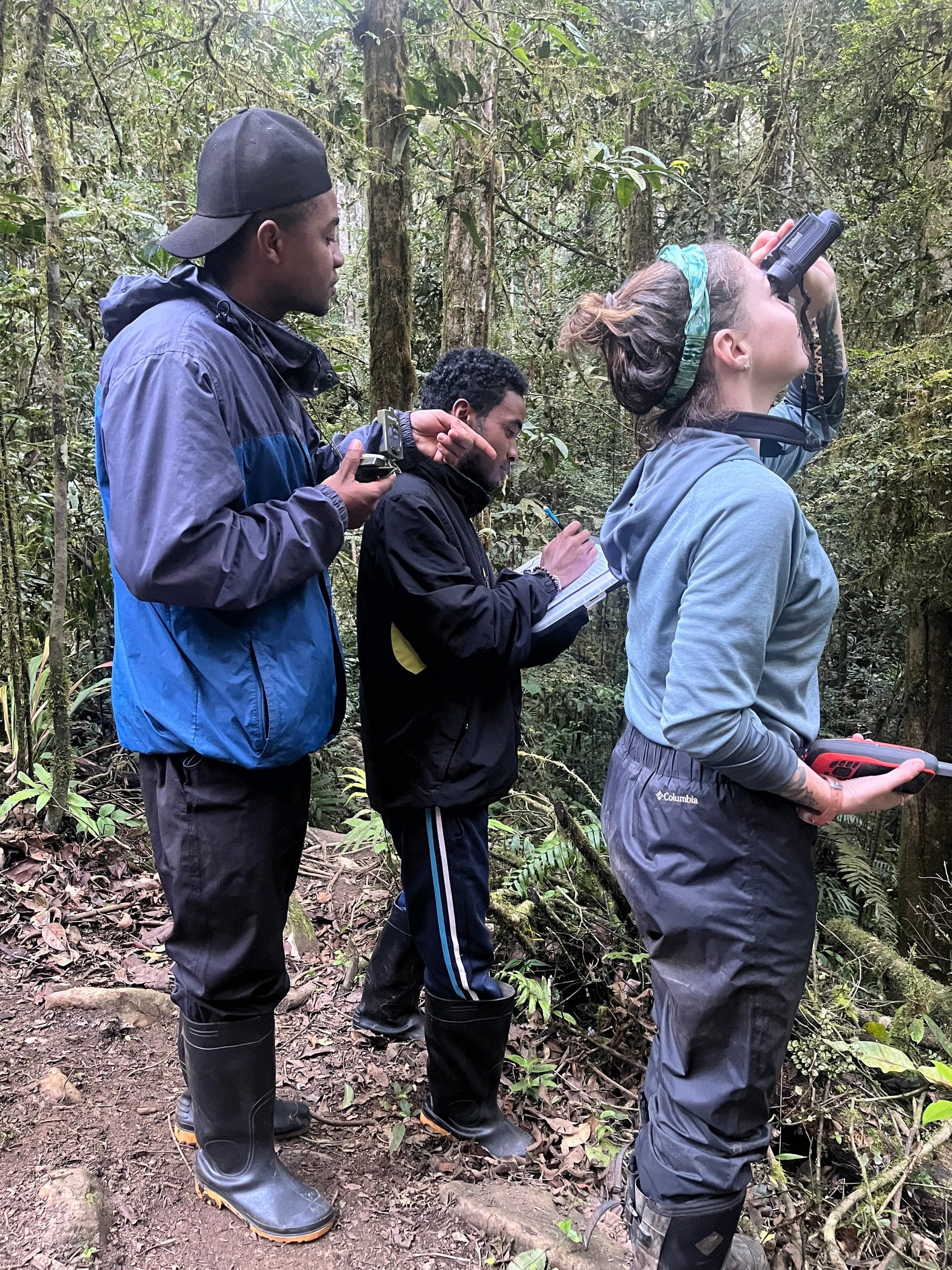
Collecting lemur and habitat data along the forest transects at ASSR; the observations that would eventually become rows, columns, maps, and models.
On paper, it is a study about density, habitat structure, and changes over time. In reality, it is also a story about people. I hope you can see how this blog started with “I” and moved to “we,” because the muddy transects, scorpion stings, accidental plunges into rivers at night, and general chaos of three months in the forest happened to at least three people on any given day. The word “we” connects me emotionally to the data. It turns entries in a spreadsheet into stories shared with a wonderful group of people. I find stories and memories in these numbers.
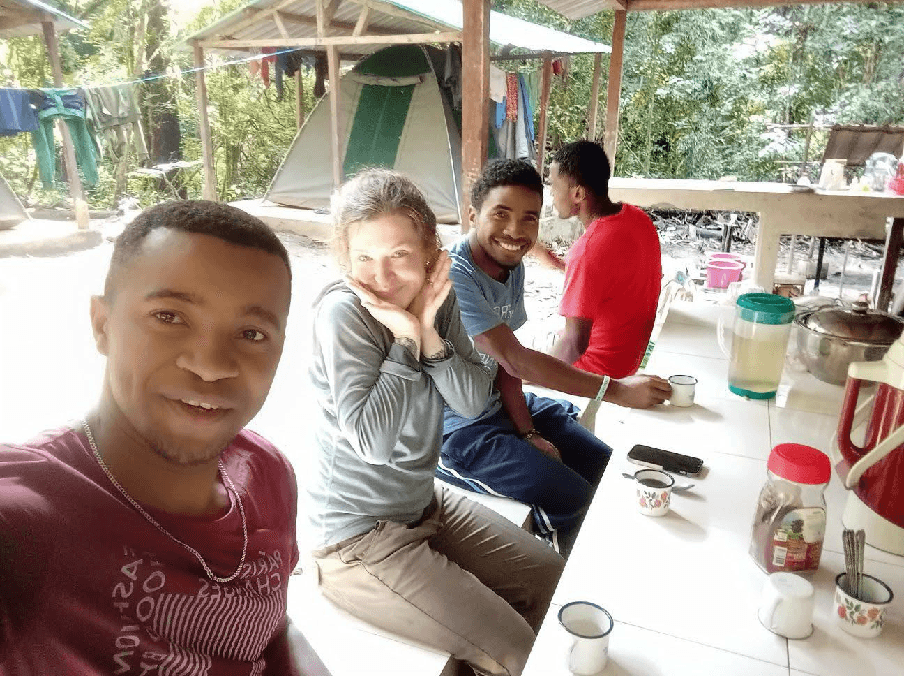
The “we” behind the data: field teams are built as much around shared meals, laughter, and life at camp as they are around hours spent together on transects.
April 24th: I stopped by myself under a tree along the transect when something tiny and hard hit me on the head. I stared up and discovered a pair of indri quietly resting above the path. As I stared at them, the reality of the situation hit me: I had just been pooped on. The next day, I fell off a log bridge, found a leech deep in my ear, and the day after that, my water filter broke! But those moments absolutely got me through the week, and remain among my favorite memories from our time at Camp Indri.
May 11th: My friend and fellow field researcher, Fidel, had his first-ever indri encounter. There were three of them, just a meter away. This was also the day Roman pointed out a panther chameleon laying eggs. And the day a group of white-fronted brown lemurs knocked an enormous branch onto our latrine.
May 18th: Frank is an Allocebus (hairy-eared dwarf lemur) wizard. He was on the Allocebus survey team at Camp Indri; he has an Allocebus as his phone background and can differentiate them from the other nocturnal lemurs in seconds! That night, he destroyed the entire camp in a game of dominoes, put on his headlamp, went out for a nocturnal survey, and found six Allocebus!
June 13th: At Camp Varecia, Pedman and I went to do a diurnal survey on one of the more distant transects. About halfway up, we stopped at a clearing after an absolutely brutal climb, and I grabbed some water. He very quietly said, “Sifaka.” I looked up, and he pointed to a big white puffball of a lemur, about 20 meters away, sitting on a tree branch and staring at us. It was one of the most unreal moments of my time at ASSR. The observation provided important information about the presence of this Critically Endangered species in the area, and it will help Wildlife Madagascar continue to monitor and protect it.
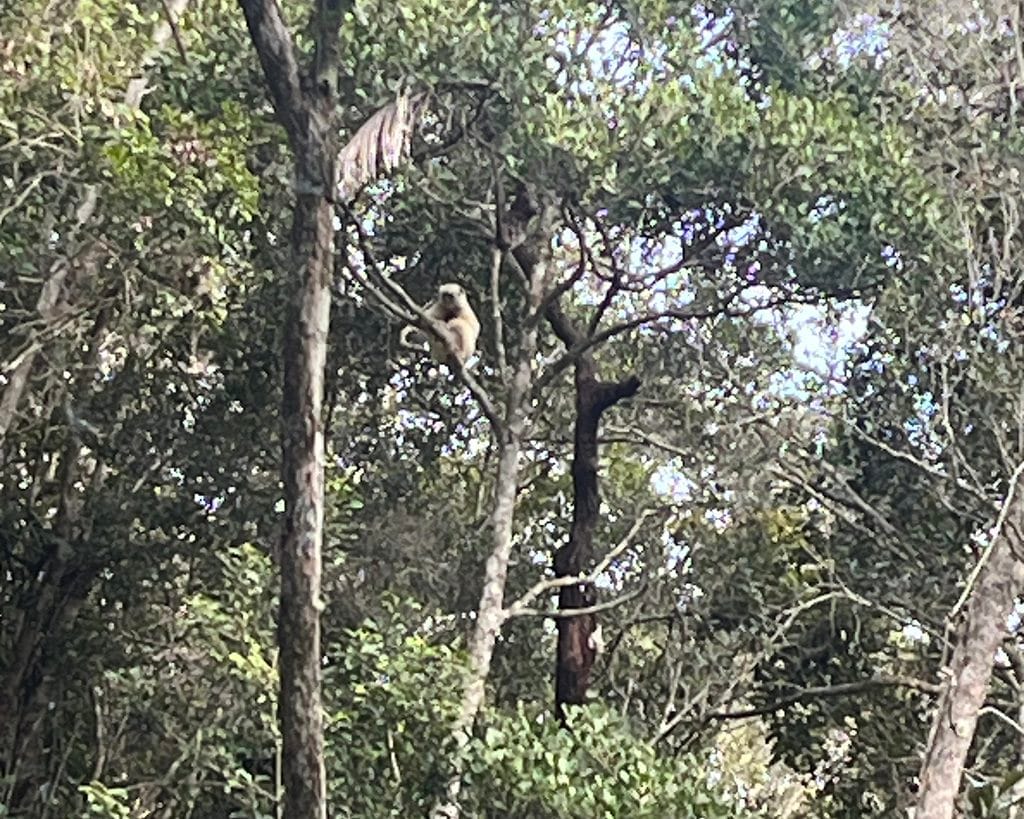
The June 13 sighting at Camp Varecia: a silky sifaka high in the canopy, an encounter that provided important new information on the species’ presence in this part of ASSR.
These are the moments I think about now when I sit at my computer analyzing the data. Analyzing this project required me to master two new software programs, and earlier today, I generated a heatmap correlating forest structure with lemur encounters. My immediate thoughts were deeply personal. “We know that transect is dense; someone stumbled over two tavolo trees there in our second week” and “Of course there is no lemur recorded at the 25-meter mark. That is exactly where I took a plunge into the river at 10 p.m.”
I realized then that I haven’t lost the artistic storytelling part of myself. If anything, it has simply found a new medium. The palette for this paper is a “we.” The colors in my data tables remind me of seeds Ariolan planted around Camp Indri, Pedman’s sifaka observation at Camp Varecia, a chameleon Romain found, and the purple duct tape we had to use to add dots to our dominoes. The numbers may eventually become graphs and statistical models. They may become figures in a dissertation or, I hope, information that contributes to conservation at ASSR. But I will always know what is behind them.
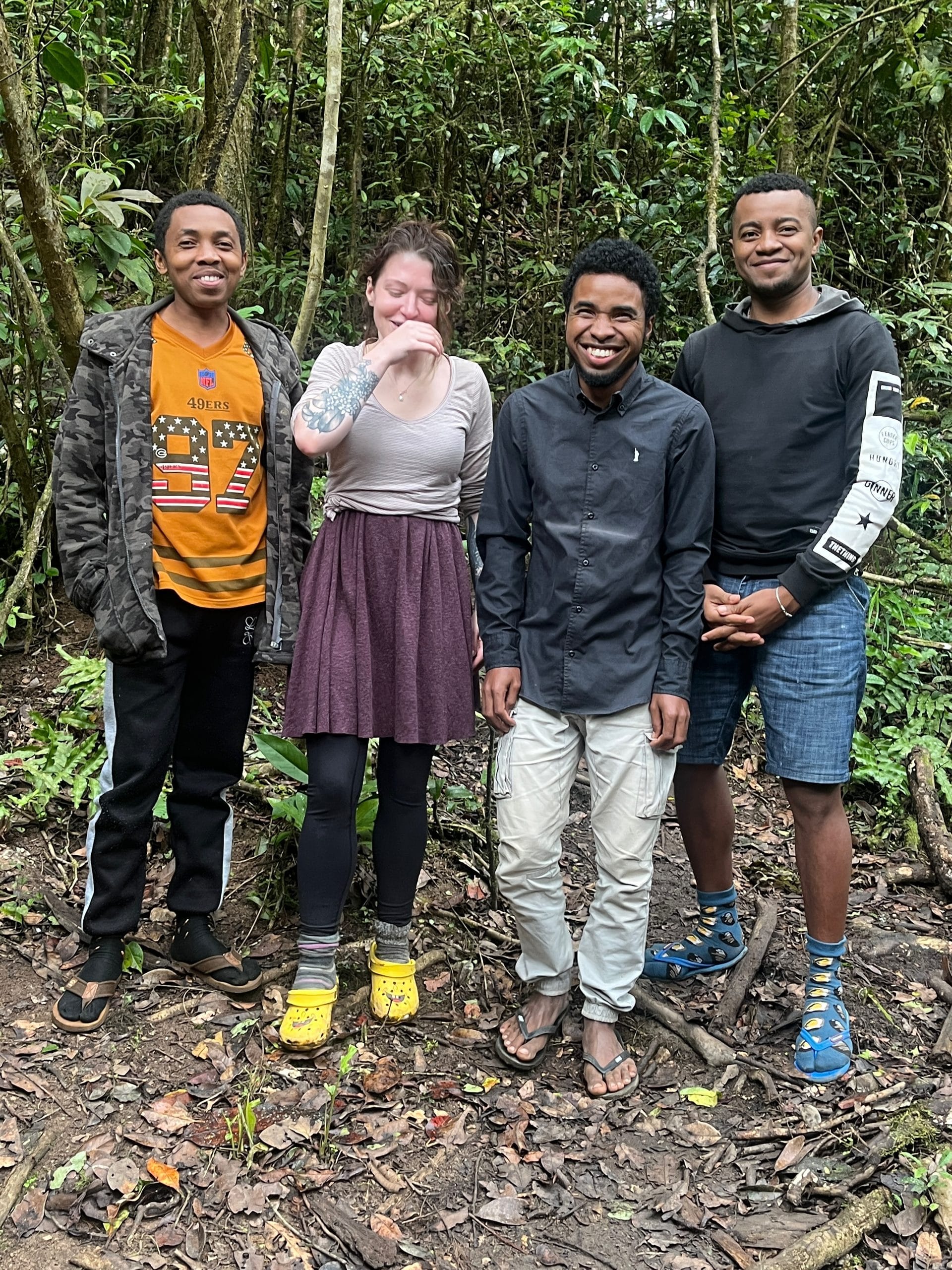
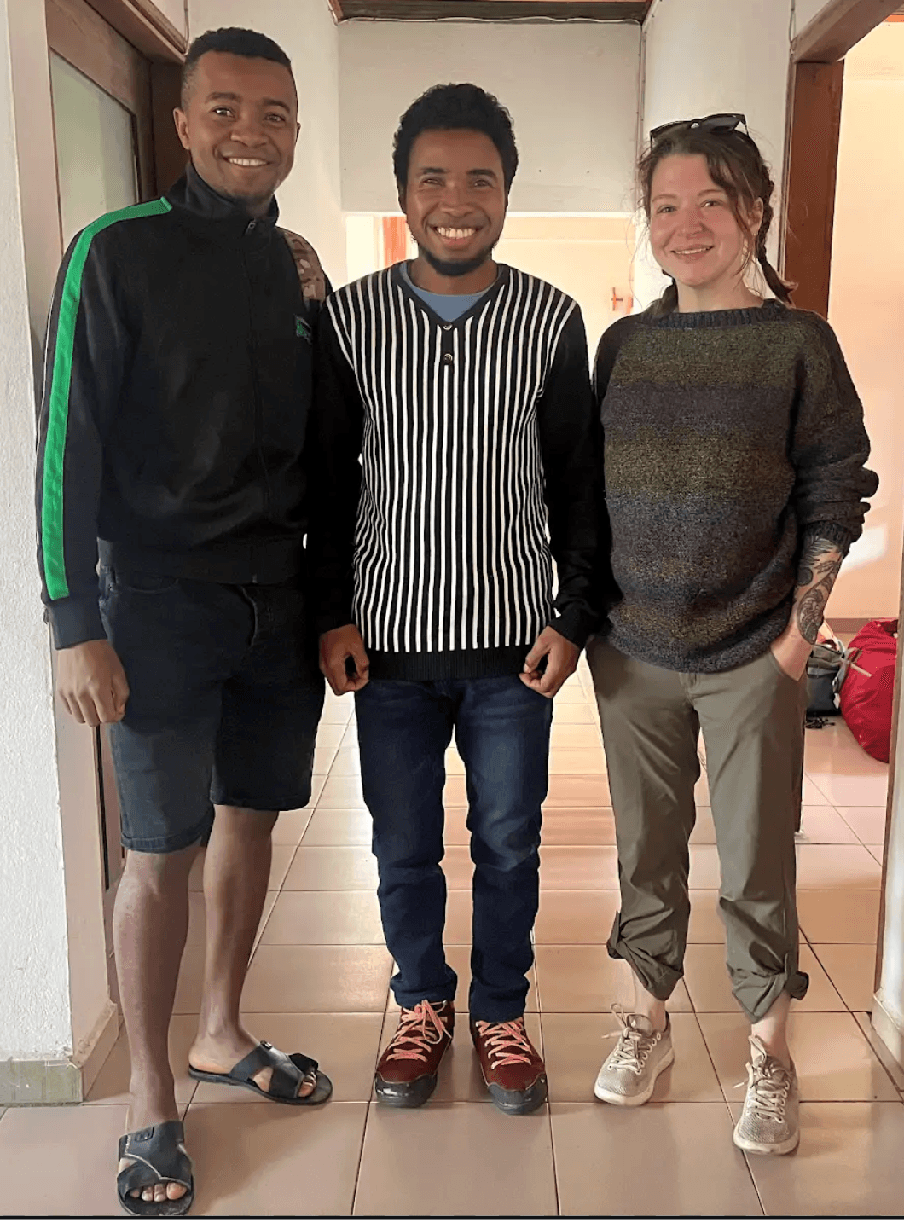
The people behind the numbers, and behind so many of the stories I will always associate with this field season.
I will know who walked those transects with me. I will remember the trees, the rain, the rivers, the lemurs, the laughter, the exhaustion, and the absurd little moments that made three months in the forest feel like so much more than a research project. Science has given me another way to tell stories. And this one belongs to all of us.
I am profoundly grateful to the remarkable people who shared this experience with me and made this project so special. I sincerely hope that the research we produced together will support Wildlife Madagascar’s ongoing conservation work at Anjanaharibe-Sud Special Reserve. Because when I look at these numbers, I don’t just see data. I see us.
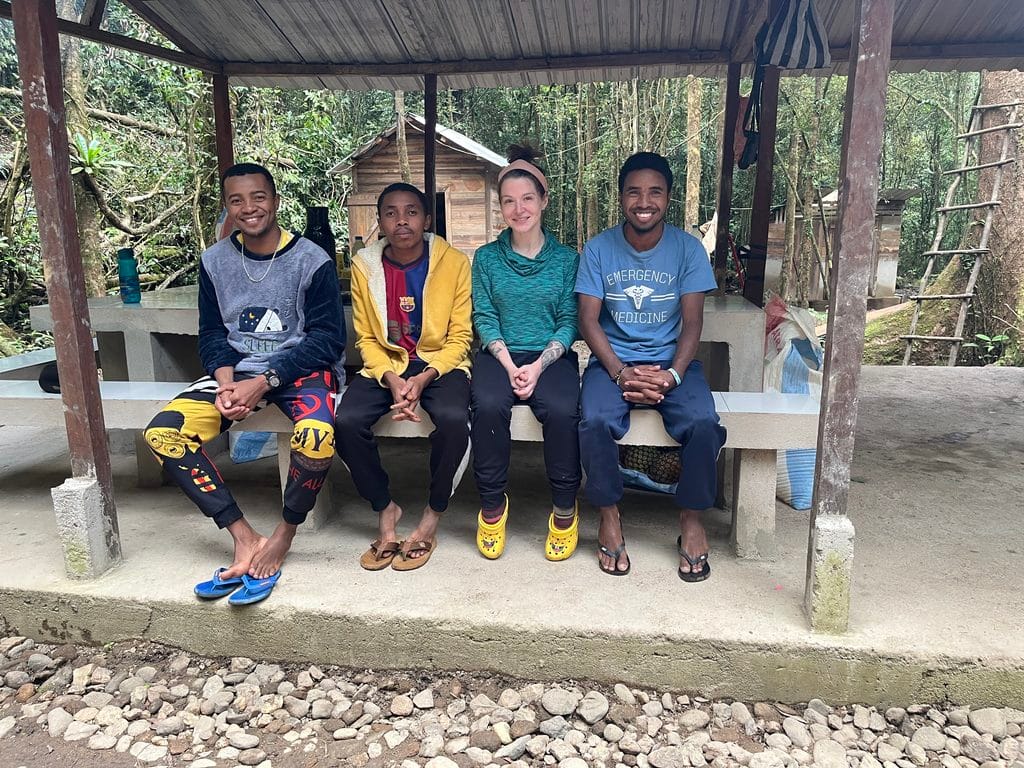
Three months of fieldwork, thousands of observations, and the people
who made the numbers mean so much more.