
Malagasy Giant Jumping Rat
Hypogeomys antimena
Critically Endangered
 ©Tiziano Hurni-Cranston
 ©Barbara Schneider
STATUS
Critically Endangered
SIZE
Body length: 12 to 14 in (30 to 36 cm)
Weight: 2.2 to 3 lbs (1 to 1.5 kg)
HABITAT
Dry deciduous forest
DIET
Fruits
Seeds and nuts
Leaves
Bark
Fungi
Insects
LIFESTYLE
Mostly nocturnal
Terrestrial
Social
REPRODUCTION
Gestation: 138 to 150 days
Young: 1
THREATS
Habitat loss
Deforestation
Wildfires
Introduced predators

INTERESTING FACTS
This rat species lives up to the “giant” in its name: it can weigh up to 3 pounds (1.5 kilograms)!
Malagasy giant jumping rats form long-term pair bonds, which is unusual among rodents, and both parents help raise the young, usually a single pup.
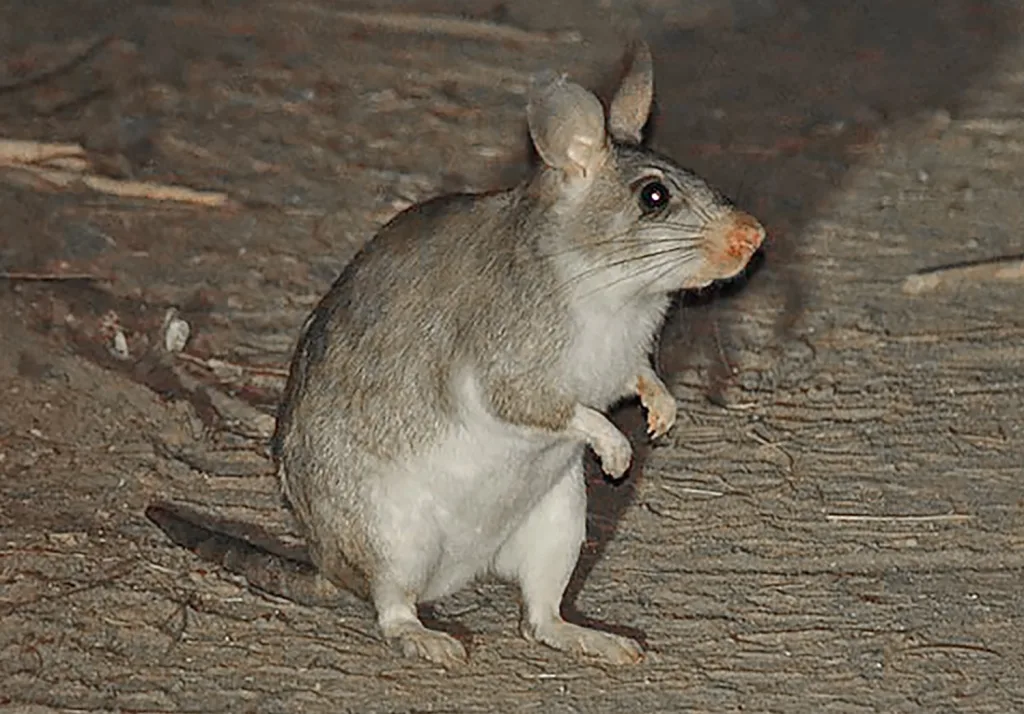
Their long back legs and strong tail allow them to balance upright, and they can leap a distance of over three feet.
These rats develop complex underground burrow systems with several entrances and exits, which may be used for many years by successive generations.
Characteristics
The Malagasy giant jumping rat (Hypogeomys antimena) is one of Madagascar’s most unusual and least-known mammals. Despite its common name, it isn’t closely related to the familiar rats found around the world. Instead, it belongs to the Nesomyidae, a remarkable family of rodents that evolved in isolation after colonizing the island of Madagascar millions of years ago.
 ©Petr Hamerník
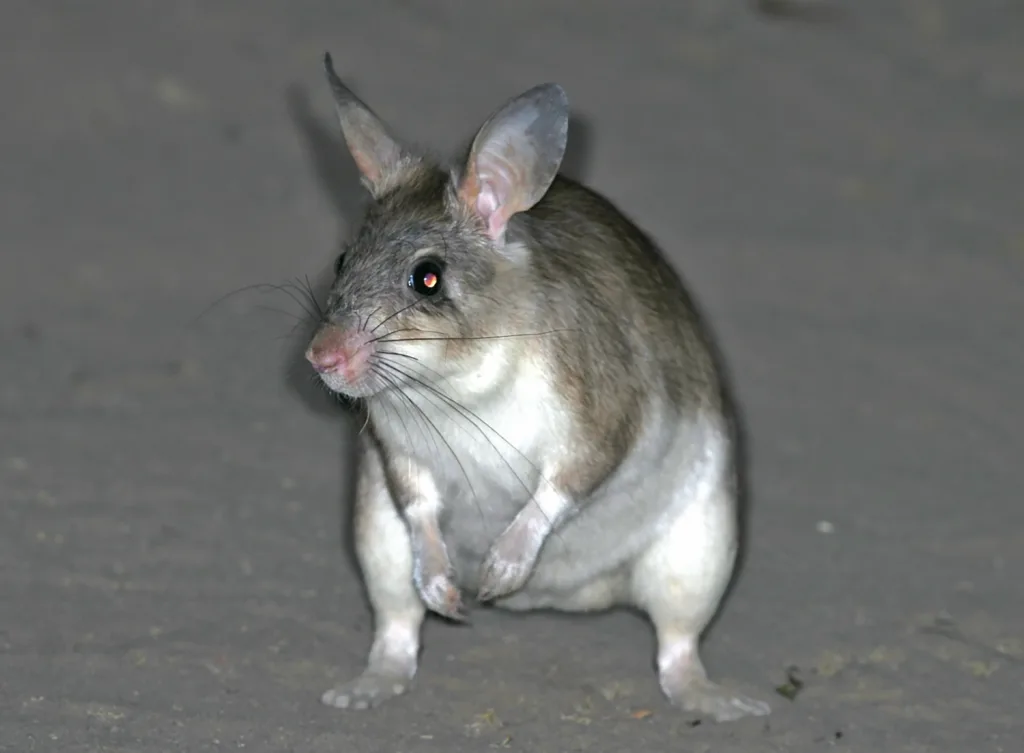
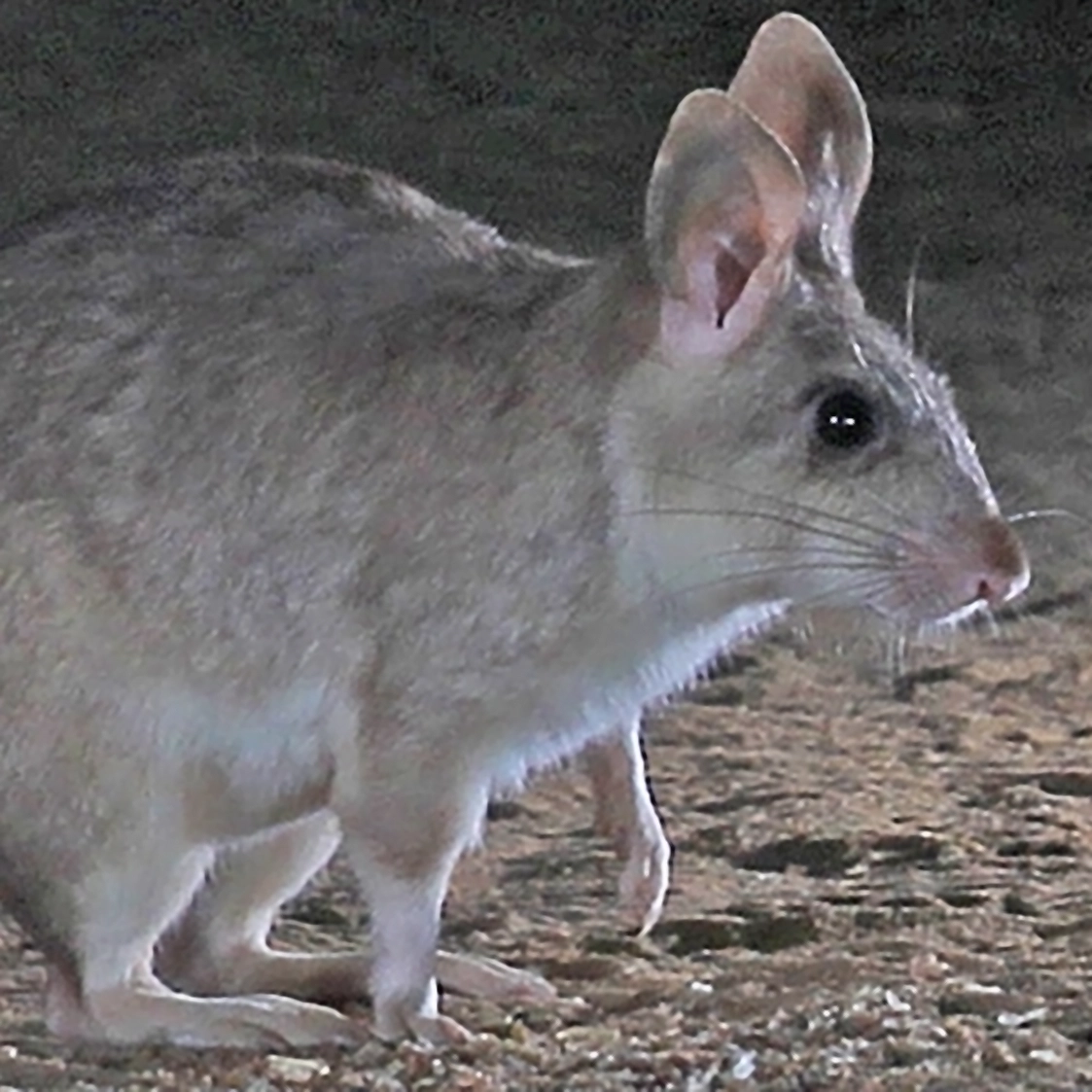
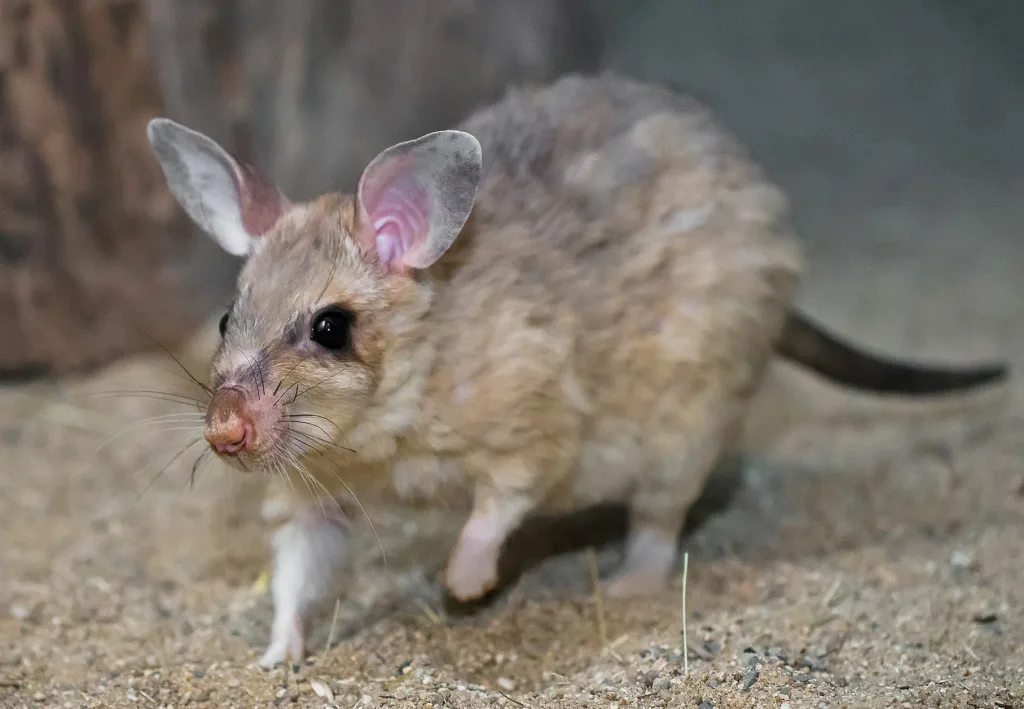
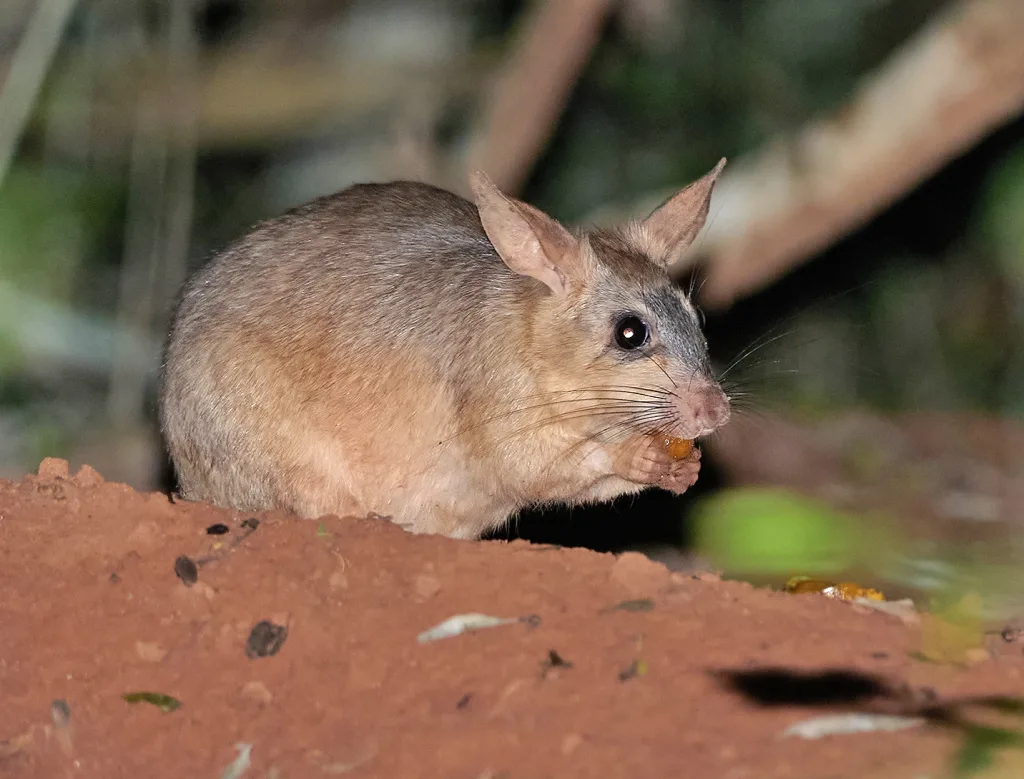
As the largest native rodent on the island, adults are roughly the size of a small rabbit. Their dense fur is soft and velvety, colored grayish brown across the back with white underparts, allowing them to blend seamlessly into the dry forest floor. Their most distinctive feature is their extraordinarily long, muscular hind legs. These powerful limbs are proportionally much larger than the front legs, a look that is more like a tiny kangaroo than a typical rodent. The hind feet are elongated and equipped with strong claws that provide excellent traction during rapid leaps. While the forelimbs are used for digging burrows, manipulating food, and grooming, the hindquarters provide power for locomotion.
The long tail serves as an important counterbalance during movement, helping maintain stability during rapid changes in direction. Unlike many climbing rodents, the tail is not prehensile but instead functions much like that of a kangaroo or jerboa, aiding balance while hopping.
These rats also possess remarkably large ears and prominent dark eyes, adaptations that enhance hearing and vision in the dim light of dawn, dusk, and nighttime hours. Their whiskers are exceptionally sensitive, allowing them to navigate dense vegetation and detect obstacles while moving through the forest under cover of darkness.
Habitat
The Malagasy giant jumping rat is found only in a small region of western Madagascar, where it inhabits the dry deciduous forests. These forests experience dramatic seasonal changes. During the long dry season, many trees lose their leaves, allowing sunlight to reach the forest floor and creating a carpet of dry leaf litter. The rainy season transforms the habitat into a greener landscape rich in fruits, flowers, and insects. Within this ecosystem, giant jumping rats prefer areas with deep sandy soils suitable for burrowing, dense understory vegetation, and thick leaf litter with fallen logs.
Their burrows can be surprisingly elaborate, often featuring multiple entrances, escape tunnels, nesting chambers, and side passages. Some burrow systems are used for many years by successive generations and provide protection from predators, heat, and seasonal weather extremes. Because the species depends on intact forest and suitable soils for burrowing, habitat fragmentation can isolate populations and reduce opportunities for dispersal.
 ©gauvain_saucy
Foods and Feeding
The Malagasy giant jumping rat is an omnivorous forager, taking advantage of the seasonal foods found in Madagascar’s western dry forests. Its diet shifts throughout the year depending on rainfall and plant productivity. Favorites include fallen fruits, seeds, young leaves and shoots, nuts, bark, fungi, and occasionally small insects. Strong incisors enable the rat to crack open hard seeds and nuts that many smaller mammals cannot access. As it feeds, it performs an important ecological role by dispersing seeds throughout the forest, contributing to plant regeneration.
Most foraging occurs at night, when cooler temperatures reduce water loss and many predators are less active. Individuals often follow well-established routes through their territories, stopping frequently to investigate food sources with their sensitive noses and whiskers. Unlike species that store large food caches, Malagasy giant jumping rats generally consume food as they find it, although temporary storage of particularly valuable food items has been observed. Seasonal variation in fruit production may influence nightly travel distances, with individuals ranging farther during periods of scarcity.
Behavior
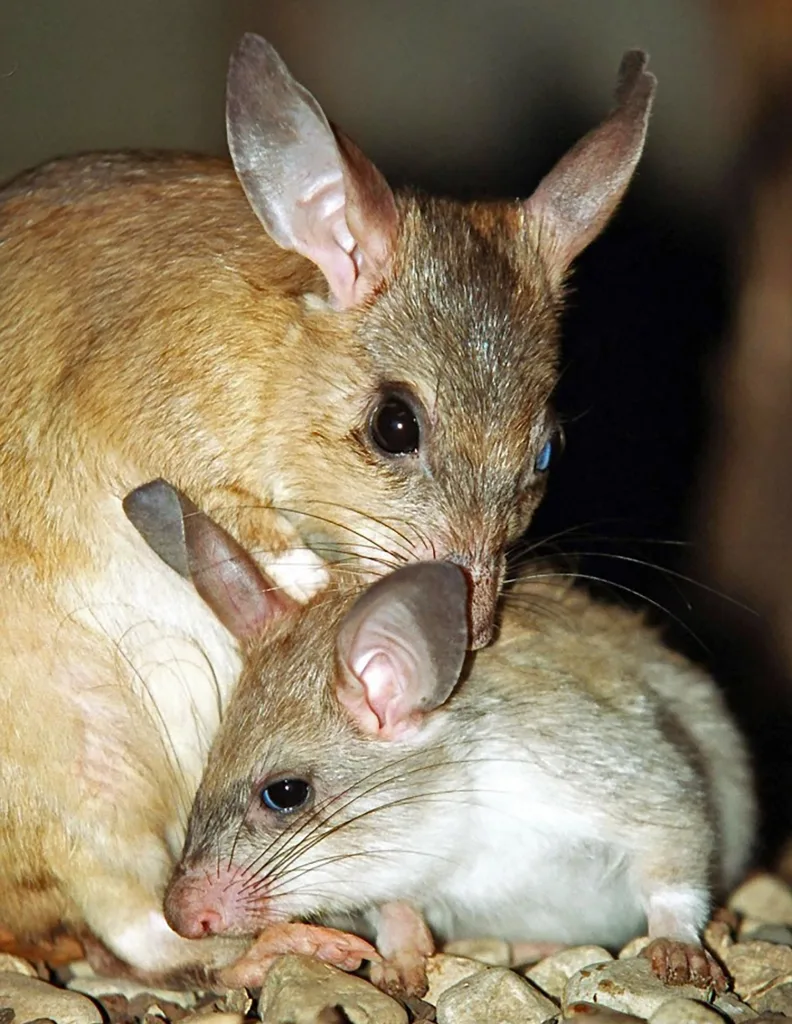
The Malagasy giant jumping rat is primarily nocturnal and spends most of its time on the forest floor. During daylight hours, it remains hidden inside elaborate underground burrow systems, emerging only after sunset to forage. Unlike many rodents that live in large colonies, this species is notable for its strongly monogamous social system. Adult males and females typically form long-term pair bonds, an uncommon trait among rodents. A mated pair occupies and defends a territory together, cooperating in raising their young and maintaining their burrow. Territories are actively defended from neighboring pairs using scent marking, vocalizations, and occasional physical confrontations. Family groups generally consist of the breeding pair and their offspring, creating a relatively stable social structure.
When threatened, the Malagasy giant jumping rat relies on its remarkable athletic ability. Rather than weaving through vegetation, it makes a series of powerful leaps that can exceed one meter (over three feet) in length. These dramatic bounds allow it to quickly escape predators while navigating fallen logs, roots, and dense undergrowth with surprising agility. Although generally quiet animals, these rats communicate through a combination of scent signals, body posture, foot drumming, and soft vocalizations. Their acute hearing allows them to detect approaching predators long before they become visible.
 ©Maris Lielkalns
Reproduction and Life Cycle
The Malagasy giant jumping rat has one of the slowest reproductive rates of any rodent. Breeding generally occurs once a year, shortly before or during the rainy season when food becomes more abundant. After a gestation period of approximately 138 to 150 days—remarkably long for a rodent—the female gives birth to a single pup. Twins are extremely rare.
This slow reproductive strategy places tremendous importance on each offspring. Both parents participate in caring for the young, which remain in the safety of the burrow during their earliest weeks of life. The pup develops slowly, nursing for an extended period and remaining with its parents well beyond weaning.
Males reach sexual maturity around one year of age, while it is thought that females are probably not sexually mature before two years of age. The young may remain within the family territory for several months before dispersing. This extended parental care is highly unusual among rodents and reflects the species’ investment in producing a small number of well-developed offspring rather than many rapidly maturing young.
Conservation and Threats
The Malagasy giant jumping rat is currently classified as Critically Endangered, making it one of the world’s rarest rodents. Today, its remaining habitat occupies only a tiny fraction of its historical range, and populations continue to decline. The species faces numerous threats, including deforestation for agriculture, illegal logging, charcoal production, habitat fragmentation, wildfires, and predation by introduced dogs and cats. Because females produce only one offspring each year, populations recover very slowly after declines. Even small increases in adult mortality can have significant long-term impacts.
Conservation efforts focus on protecting the remaining dry deciduous forests through habitat preservation, scientific monitoring, community engagement, and predator management. Ecological studies have greatly improved the understanding of the species’ behavior, social structure, and reproductive biology, providing valuable information for future conservation planning.
The Malagasy giant jumping rat serves as an important ambassador for Madagascar’s dry forests. While lemurs may capture most of the attention, this remarkable rodent reminds us that the island’s evolutionary story extends far beyond its famous primates. That story deserves every effort to make sure it continues.