
Madagascar fire millipede
Aphistogoniulus hova
Least Concern
STATUS
Least Concern
SIZE
Body length: 8 to 12 in (20 to 30 cm)
HABITAT
Humid rainforest
DIET
Detritivore
LIFESTYLE
Mostly nocturnal
Terrestrial
Solitary
THREATS
Habitat loss
Deforestation
Wildfires
Climate change

INTERESTING FACTS
The fire millipede’s bright red color warns off potential predators by announcing it is not good to eat—when threatened, these millipedes secrete defensive chemicals that include cyanide and benzoquinones, an irritating and foul-tasting mixture that repels ants, spiders, reptiles, birds, and some mammals. But some lemurs actually look for fire millipedes and rub them on their fur, using the secretions as an insect repellent.
These invertebrates are ecosystem engineers, efficient decomposers that specialize in consuming dead organic material on the rainforest floor and breaking it down to renew the soil.
Millipedes breathe through tiny openings along their bodies called spiracles, which need to remain moist to function, so these invertebrates depend on a humid rainforest environment.
The name “millipede” means 1,000 feet. While each of the segments along the body has two legs on each side, resulting in a lot of feet, most have 300 to 400 feet, depending on their age and length.
Characteristics
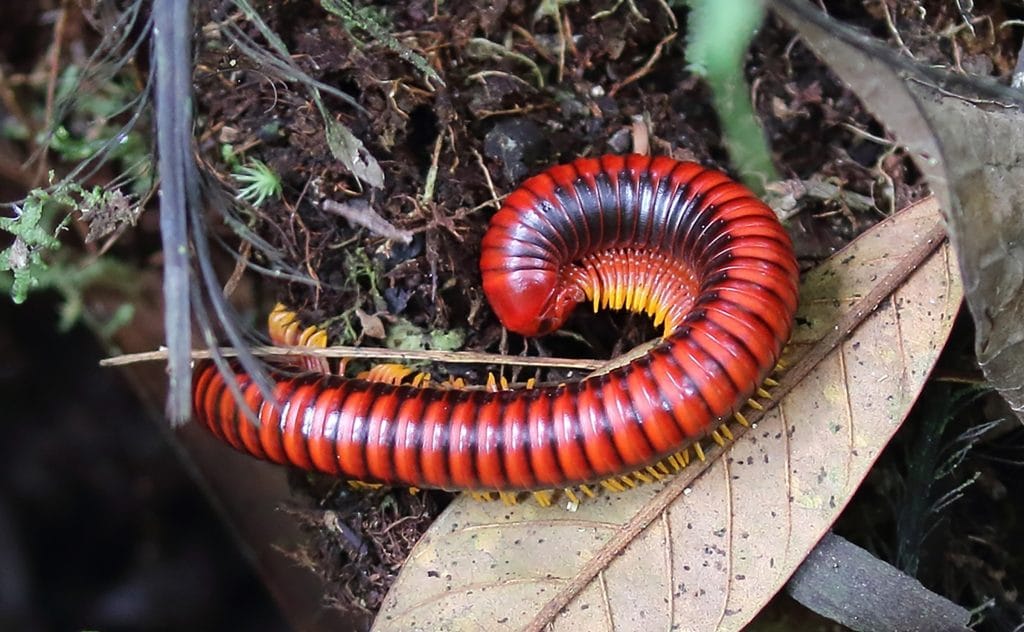
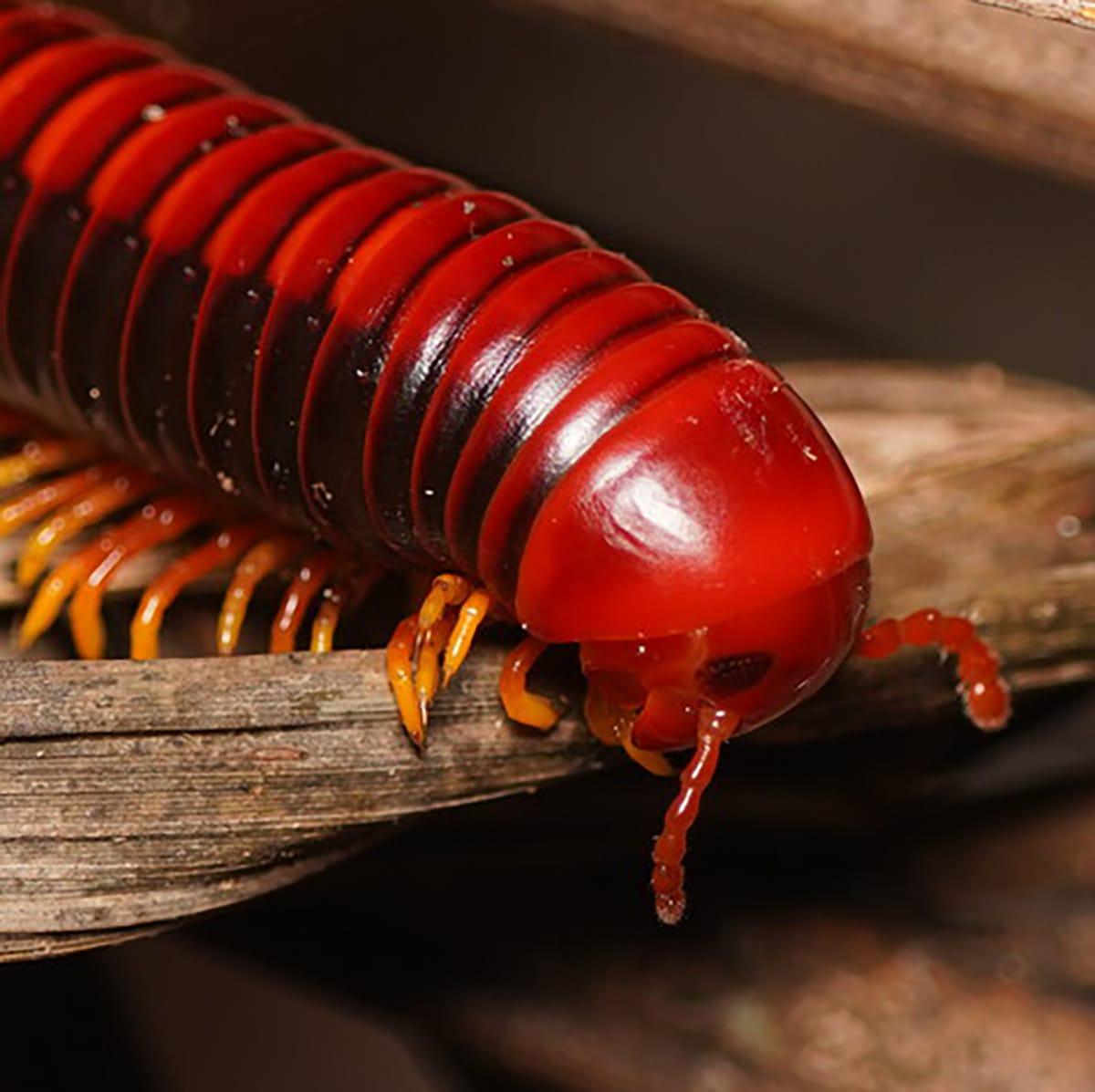
The Madagascar fire millipede is one of Madagascar’s most striking invertebrates. With its glossy, jet-black body accented by brilliant scarlet-red bands, it looks as though it has been painted with warning colors—and in a way, it has. While many millipedes rely on camouflage for cover, this species advertises its defenses with bold coloration, a strategy known as aposematism, warning predators that they should stay away—because if threatened, the millipede secretes a noxious brew of unpleasant toxins.
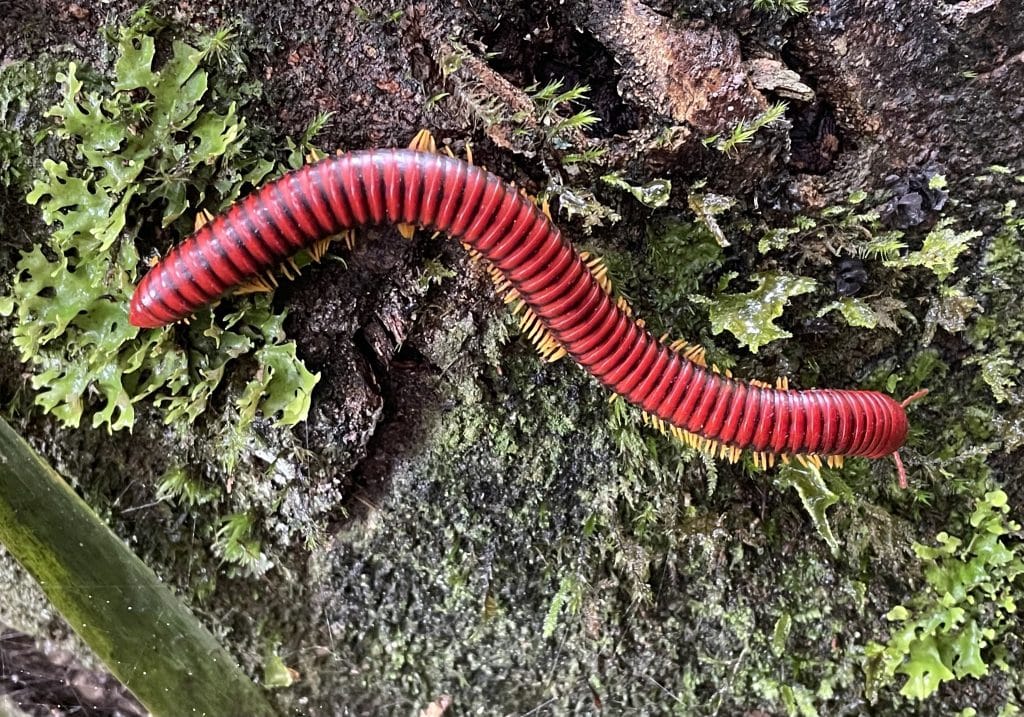
Millipedes belong to the class Diplopoda, meaning “double-footed.” Most body segments have two pairs of legs attached. Adult Madagascar fire millipedes can grow to 8 to 12 inches (20 to 30 centimeters) long. Their cylindrical bodies are composed of numerous hardened segments that form flexible armor, allowing them to navigate leaf litter while remaining well protected.
Despite their many legs, they move with remarkable coordination, creating smooth, wave-like motions that allow them to travel efficiently across uneven forest floors. Their antennae are constantly in motion, sampling the environment for food, moisture, and potential threats. Although their eyesight is relatively poor, they compensate with highly developed sensory organs that detect chemical cues and vibrations in the surrounding leaf litter.
Habitat
The Madagascar fire millipede is endemic to Madagascar and is most commonly associated with the island’s humid eastern rainforests, although some populations occur in other moist forest habitats. It thrives in environments where humidity remains consistently high and thick layers of leaf litter accumulate year after year.
The forest floor provides everything the species requires: food, shelter, stable temperatures, and protection from dehydration. Because millipedes breathe through tiny openings called spiracles, excessive water loss can be life-threatening. Remaining within cool, shaded habitats allows them to maintain the moisture balance essential for survival. The species also contributes to soil formation. As generations of millipedes process enormous quantities of leaf litter, they help create rich, fertile soils that support the diverse plant communities.
Foods and Feeding
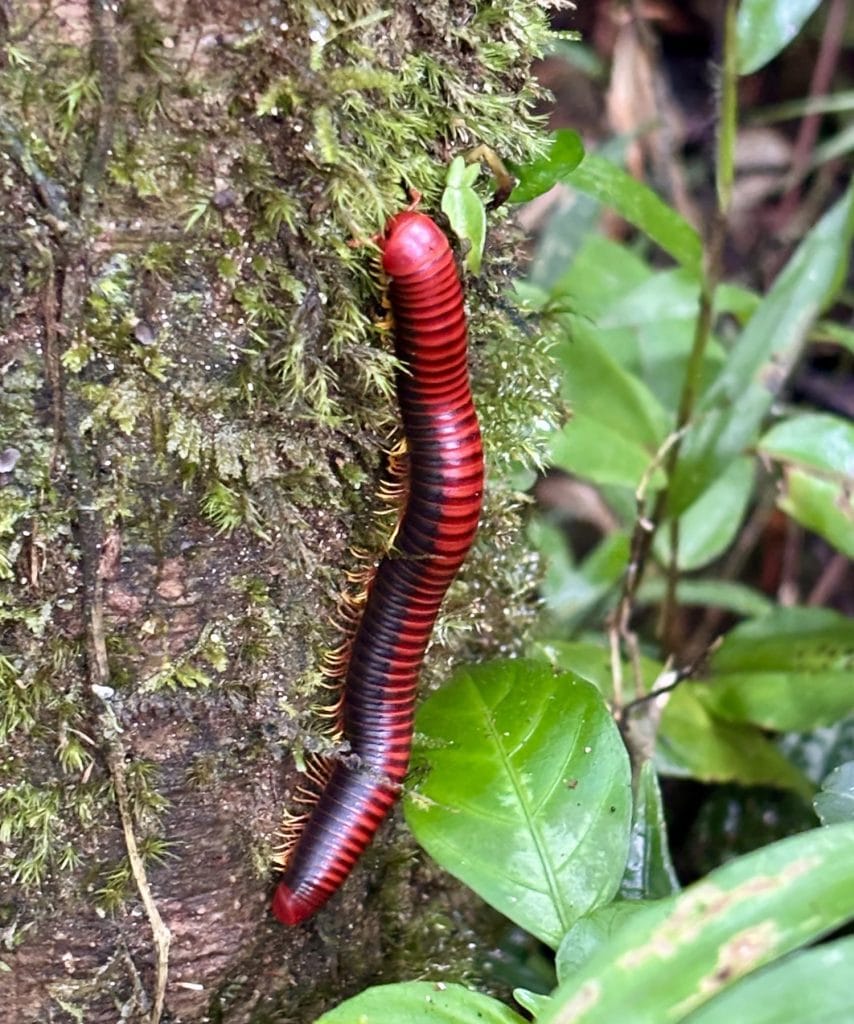
The Madagascar fire millipede is one of nature’s most efficient decomposers. Unlike herbivores that feed on living plants, it specializes in consuming dead organic material that would otherwise accumulate on the forest floor. Its diet includes decaying leaves, fallen fruit, rotting wood, mosses, fungi, flower petals, bark fragments, and other decomposing plant material.
Powerful mandibles scrape and shred soft organic matter into smaller pieces before it enters a digestive system specially adapted to extract nutrients from partially decomposed vegetation. Microorganisms within the gut help break down complex plant compounds, allowing the millipede to utilize food that many other animals cannot digest.
As they feed, these millipedes perform a critical ecological service. By fragmenting leaf litter and wood into smaller particles, they dramatically increase the surface area available for bacteria and fungi to continue decomposition. Their nutrient-rich waste returns essential minerals to the soil, supporting plant growth and maintaining healthy forest ecosystems. In many ways, the Madagascar fire millipede functions as one of the rainforest’s most important recyclers.
Behavior
The Madagascar fire millipede is a slow-moving, largely nocturnal detritivore, spending much of the day hidden beneath fallen logs, rocks, or deep layers of leaf litter where humidity remains high. As evening arrives, it emerges to forage, becoming an important member of Madagascar’s army of forest recyclers.
Although generally solitary, Madagascar fire millipedes often occur in relatively high densities where habitat conditions are favorable. During particularly humid periods, several individuals may be seen foraging in the same area, quietly working through the forest floor without direct interaction.
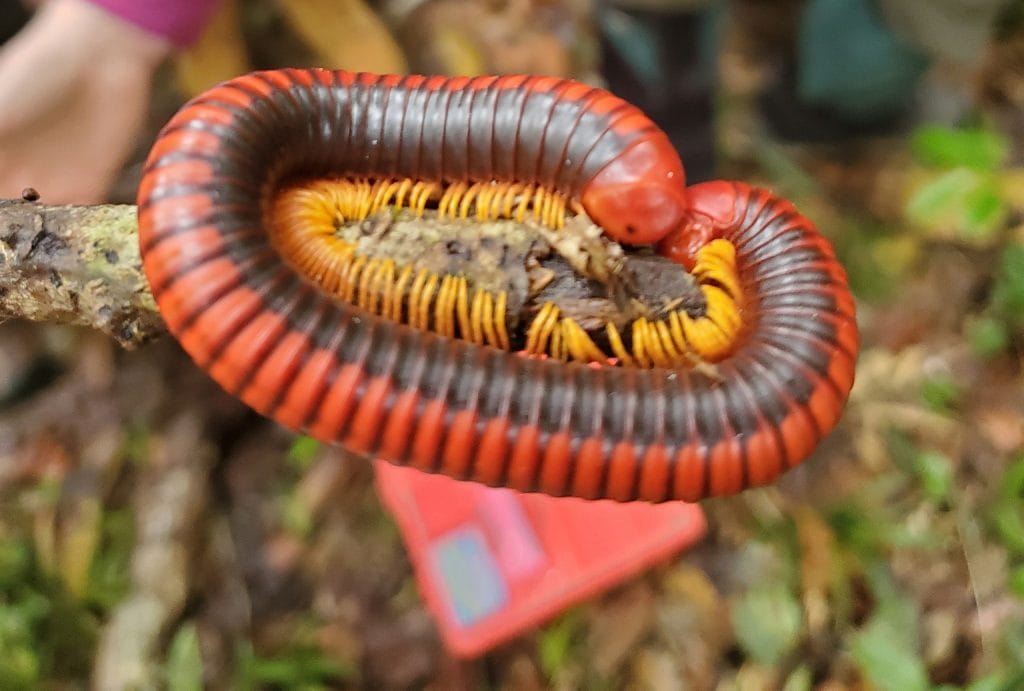
Rather than relying on speed to escape danger, this species has evolved an impressive suite of defensive behaviors. When disturbed, it immediately coils into a tight spiral, protecting its soft underside beneath the hard exoskeleton. In this position, only the heavily armored outer segments are exposed, making it difficult for many predators to gain a foothold.
If rolling into a ball isn’t enough, the fire millipede has another trick. Specialized glands along the sides of its body release defensive chemicals that can repel ants, spiders, reptiles, birds, and small mammals. While the exact chemical composition varies among millipede species, these secretions are generally irritating and foul-tasting, reinforcing the warning provided by the animal’s vivid coloration. The secretions of the Madagascar fire millipedes have been found to contain cyanide and benzoquinones. Predators that ignore the “red means stop” message rarely make the same mistake twice.
However, there is an interesting exception: black lemurs and red-fronted lemurs actively seek out fire millipedes. They bite and manipulate the toxic insects to trigger the release of the defensive chemical secretions, and then rub them onto their fur. It’s a type of self-medication, serving as a natural insecticide—and can even give the lemurs a narcotic “high”!
Reproduction and Life Cycle
Like many millipedes, the Madagascar fire millipede has a relatively slow-paced life. Courtship relies heavily on chemical communication, with males using their antennae to detect pheromones released by receptive females. During mating, the male transfers sperm using specialized reproductive appendages called gonopods, which are modified legs located near the front of the body. After fertilization, the female deposits her eggs in small chambers constructed within moist soil or beneath decaying vegetation, where stable humidity helps prevent the eggs from drying out.
When the young hatch, they resemble miniature versions of the adults but possess only a fraction of the body segments and legs. Through repeated molts over several years, they gradually add new segments, legs, and body mass until reaching adulthood. Growth depends on favorable environmental conditions, including sufficient moisture and abundant food.
Conservation and Threats
The Madagascar fire millipede is not currently considered among Madagascar’s threatened endemic invertebrates, but like many forest-dependent species, its future is closely linked to the health of the island’s remaining forests. Its greatest threats include deforestation, illegal logging, habitat fragmentation, wildfires, climate change affecting forest moisture, and collection for the international pet trade.
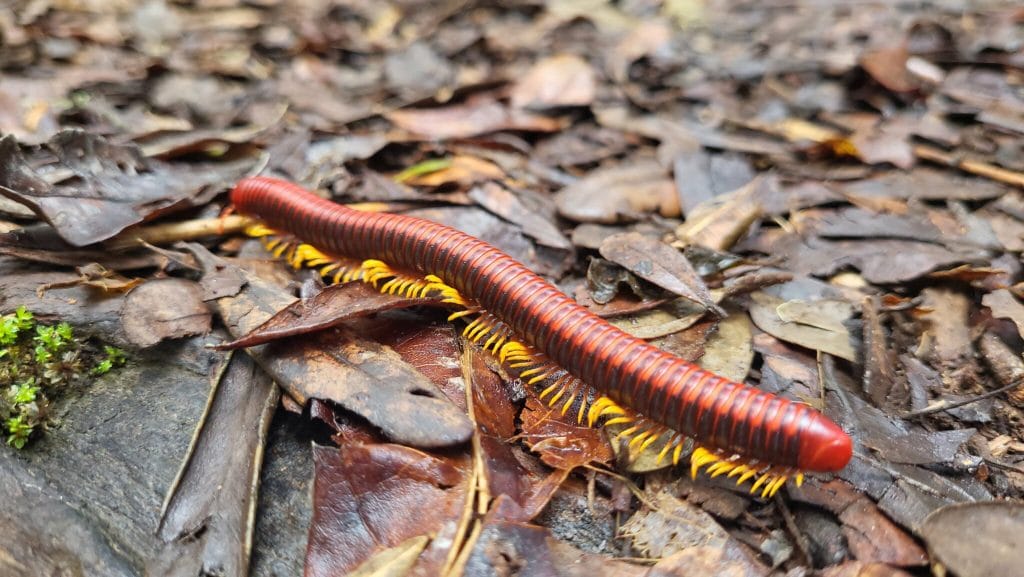
Because millipedes depend on stable humidity and deep organic soils, even partial canopy removal can alter the forest floor enough to reduce habitat quality. Drying leaf litter decomposes differently, food becomes scarcer, and conditions may become unsuitable for successful reproduction. Protecting the Madagascar fire millipede ultimately means protecting entire forest ecosystems. Conservation initiatives that preserve rainforest habitat benefit not only iconic species such as lemurs and chameleons but also the countless invertebrates responsible for keeping these ecosystems functioning.