
Petter’s Sportive Lemur
Lepilemur petteri
Endangered
STATUS
Endangered
SIZE
Body length: 9.5 to 10.2 in (24 to 26 cm)
Weight: 1.2 lbs (540 g)
HABITAT
Dry spiny forest
DIET
Mainly leaves
LIFESTYLE
Nocturnal
Arboreal
Mostly solitary
REPRODUCTION
Gestation: 5 months
Young: 1
THREATS
Habitat loss
Deforestation
Being hunted as a food source

INTERESTING FACTS
In Malagasy, sportive lemurs are referred to as “songiky” (which translates to “song” in English) because of their impressive vocal range and variety. Their sounds include barks, cries, wails, and howls, and provide territorial defense against predators and other unwanted intruders.
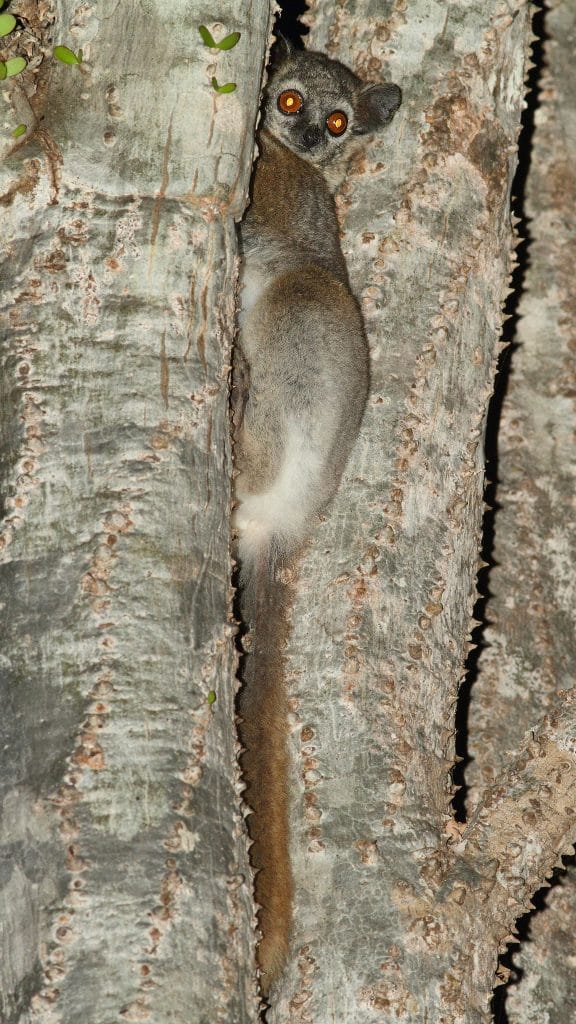
They spend almost their entire lives in the forest canopy, rarely coming down to the ground. They have strong, powerful legs that propel their movements, and they can leap 13 feet (4 meters) between trees.
Endemic to southwestern Madagascar, this little lemur lives in one of the island’s hottest and driest environments, where spiny forests can be tough places to find food, water, and shelter.
It was only in 2006 that Petter’s sportive lemur was described as a separate species from other sportive lemurs.
Characteristics
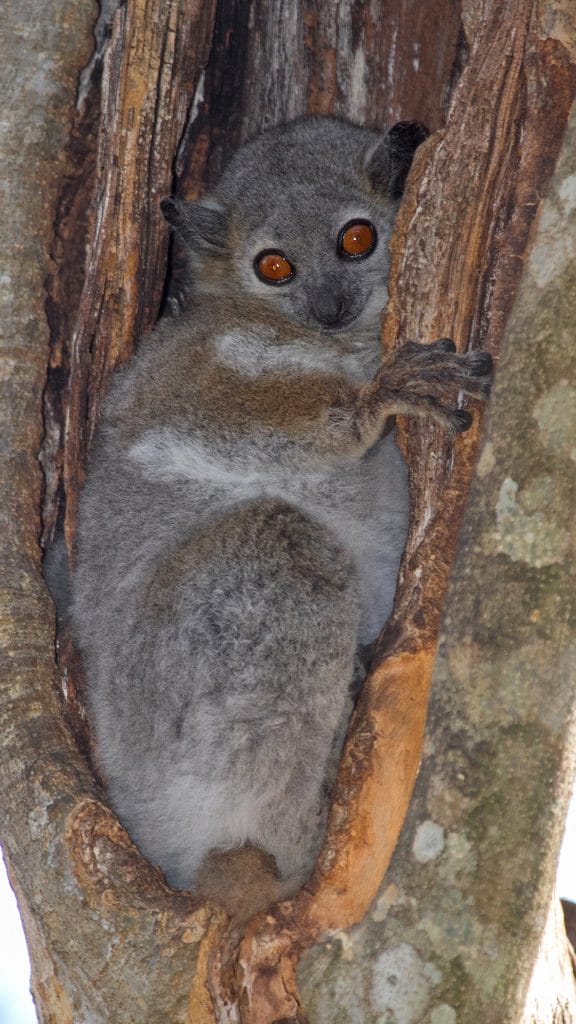
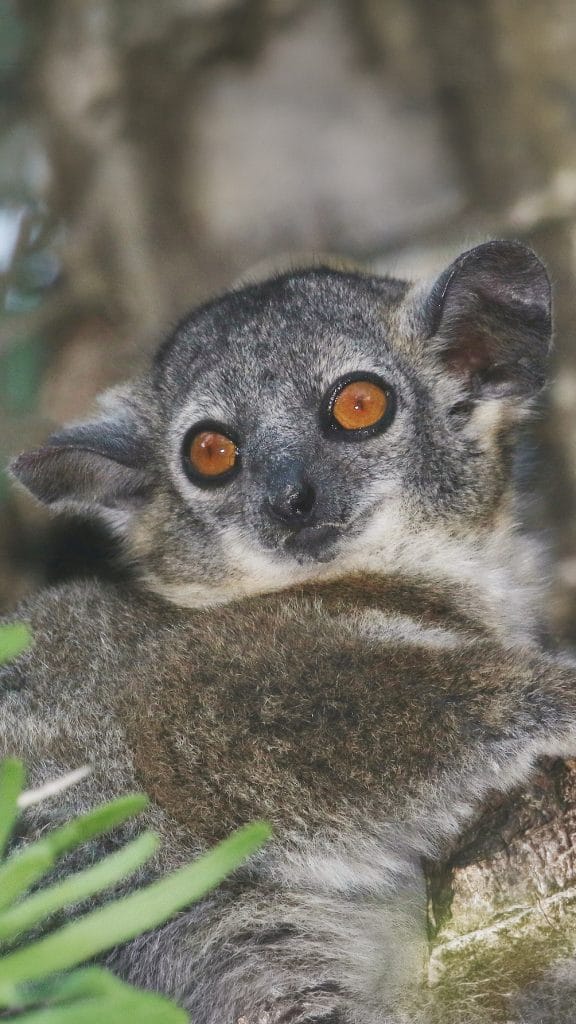
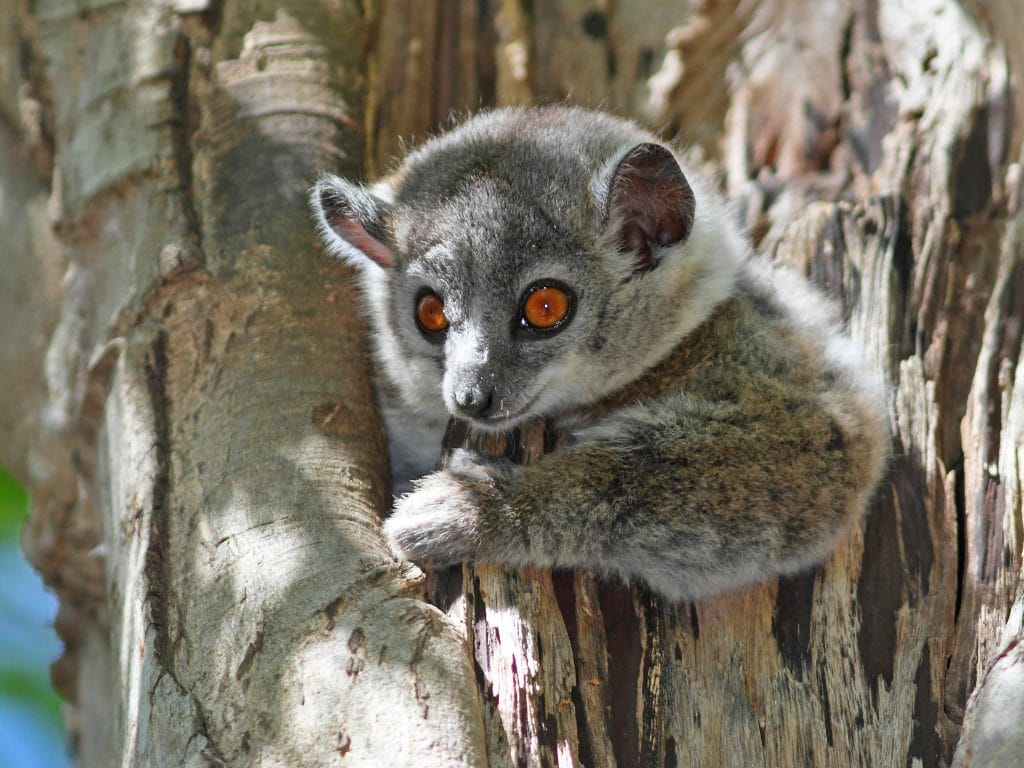
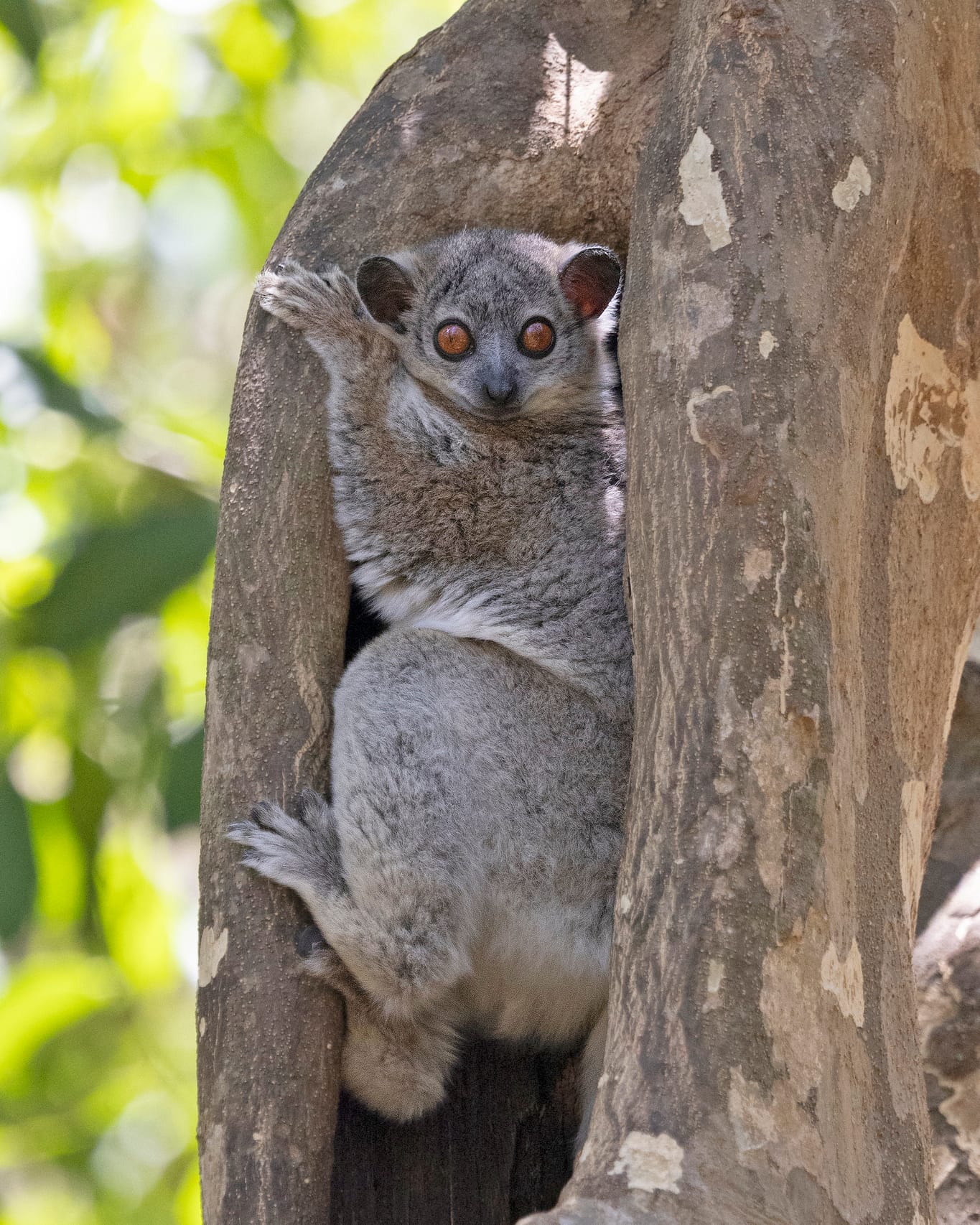
Petter’s sportive lemur is a relatively small member of the sportive lemur group, with a compact body, large round eyes, and powerful hind limbs that make it an accomplished vertical clinger and leaper. It is an arboreal species and spends most of its life in trees. Rather than strolling along branches, though, a sportive lemur can launch itself from one vertical surface to another with impressive agility, gripping tree trunks and branches with its hands and feet. These lemurs have evolved several adaptations for life in the canopy, including having opposable thumbs and big toes, large pads on their hands and feet that help with gripping, as well as a long tail that assists with balance.
 ©Markus Lilje
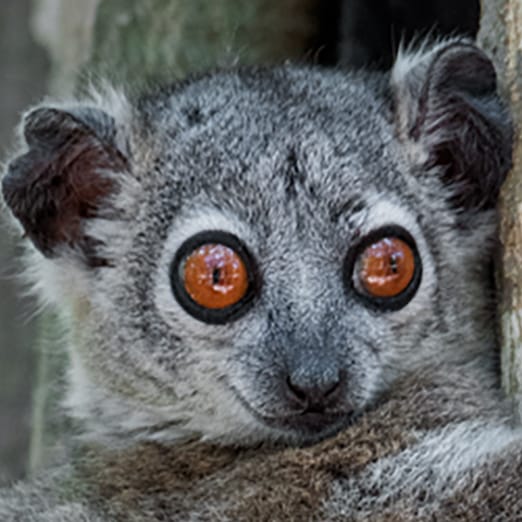
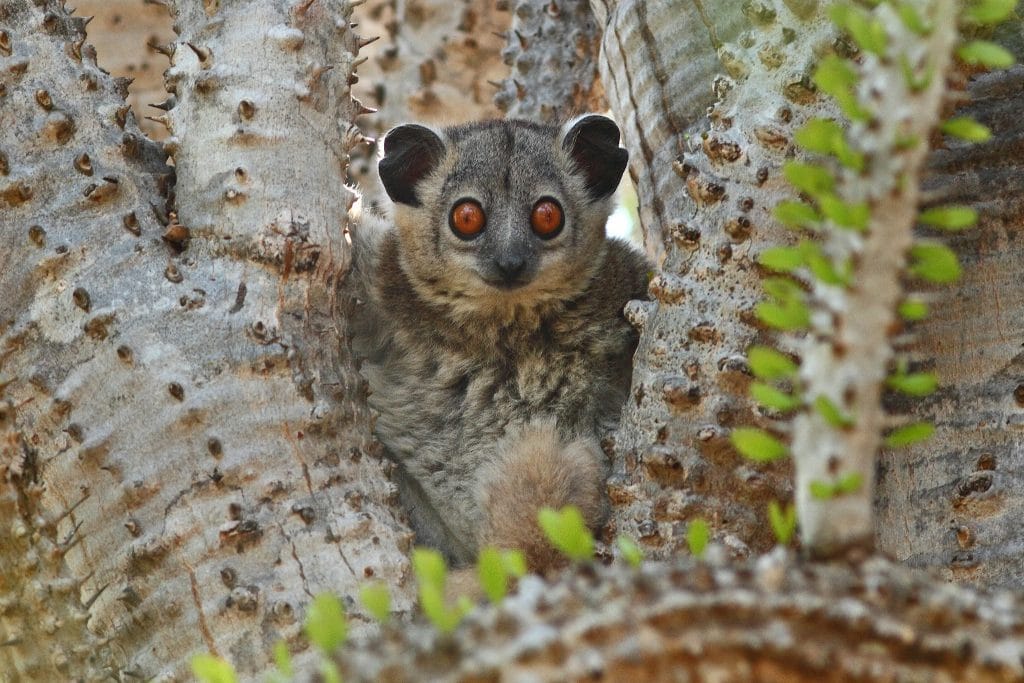
Petter’s sportive lemurs are largely nocturnal, and those large eyes help them see after dark. They contain a reflective layer called a tapetum lucidum that enhances vision in low light, producing the characteristic eyeshine that lemur researchers see when a flashlight catches an animal looking back from the trees. During the heat of the day, the lemur retreats to a sheltered resting place, conserving precious energy until nighttime brings cooler temperatures and opportunities to forage.
 ©Markus Lilje
Habitat
Petter’s sportive lemur inhabits the dry, spiny forests and gallery forests of southwestern Madagascar. This is a dramatically different environment from the lush rainforests many people associate with lemurs. Here, vegetation is adapted to heat, drought, and limited rainfall, with thorny trees and shrubs creating a distinctive landscape unlike almost anywhere else in the world.
Recent research highlights just how carefully Petter’s sportive lemur is tied to the structure of its forest home. Researchers found that the species is more likely to occur where there are greater numbers of large trees, and a diversity of large food trees. Tree diversity is particularly important, because it can help provide a more dependable food supply when individual plant species fail to produce leaves or become less productive.
Foods and Feeding
Petter’s sportive lemurs are primarily folivorous, meaning leaves make up most of their diet. Their preferred common food sources include Madagascar ocotillo (Alluaudia procera), pond cypress (Alluaudia ascendens), tamarind tree (Tamarindus indica), and pencil cactus (Euphorbia tiruculli). Flowers, particularly those from the tamarind tree, also act as a supplementary food source.
Their diet of leaves is difficult to digest, and sportive lemurs have evolved traits to cope with these harsh foods. Although they are relatively small-bodied, their intestines are long and complex, and they contain an enlarged caecum where microorganisms help break down tough plant material. Without this anatomical adaptation, they would be unable to process the leaves they eat. Digesting leaves takes a lot of time and energy, and as a result, sportive lemurs spend a large percentage of their time resting.
 ©David Robichaud
Behavior
Petter’s sportive lemur has a relatively quiet lifestyle compared with some of Madagascar’s more social lemurs. Like other members of its genus, it generally forages alone and spends much of its time resting and feeding rather than traveling long distances. After spending the daylight hours tucked into a protected resting site, it emerges after sunset to climb, leap, and search for food. Sportive lemurs are generally solitary foragers, although research indicates that some, include L. petteri, can form dispersed social arrangements in which neighboring animals maintain overlapping ranges and relationships.
Territory is important in the sportive lemur world. Individuals use vocalizations and other behaviors to communicate with neighbors and discourage competitors from moving into their space. Petter’s sportive lemur also has an unusual physiological strategy for coping with the demanding climate of southern Madagascar. Research has found that it adjusts its resting metabolism seasonally, reducing it during the hotter wet season and increasing it during the food-limited, less predictable dry season. This little lemur is remarkably good at budgeting its energy when the environment gets tough.
Reproduction and Life Cycle
Petter’s sportive lemurs are a polygynous species, so their mating system is one in which one male mates with multiple females, and each female typically mates with only one male. Males establish territories that overlap with multiple females, engaging with each during the breeding season. The breeding season generally takes place during the dry months, from May to August. After mating, females are pregnant for approximately five months. In the early wet season, between November and January, a single infant is born with open eyes and the ability to cling to its mother.
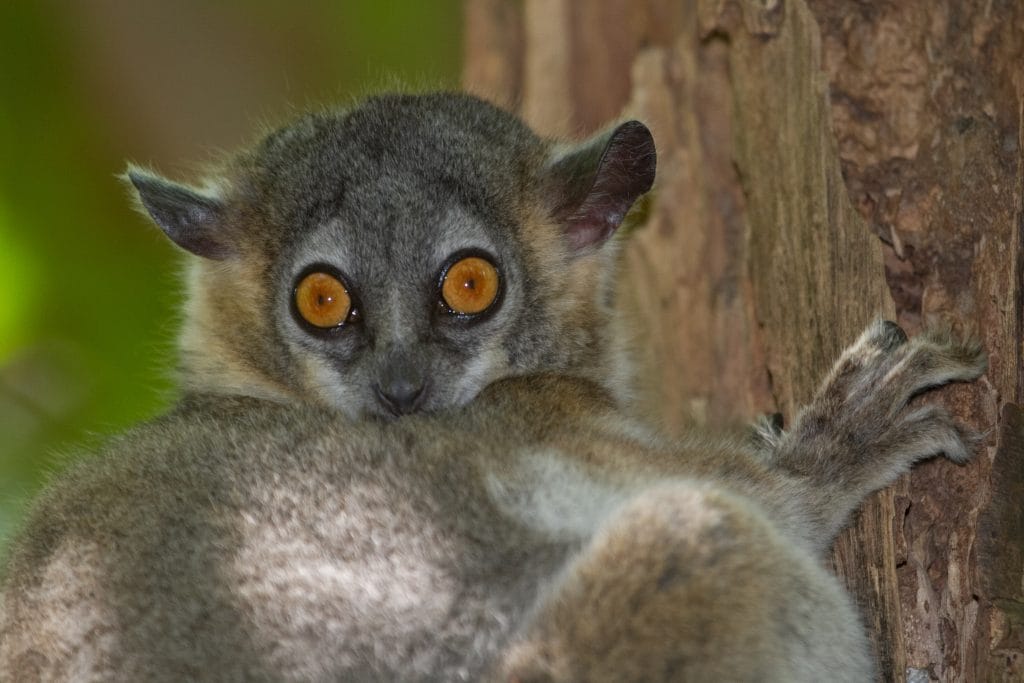
Mothers take on virtually all parental responsibilities. For the first four months of an infant’s life, they carry them in their mouths, nurse them, and temporarily leave them on branches while they forage—a behavior known as “parking.” Juveniles stay with their mother for about one year. During this time, they learn essential arboreal skills for foraging and navigation. Sexual maturity is reached at around 18 months; females remain with their mothers, while males leave in search of territory and mating opportunities.
 ©Georgeanne Irvine
Conservation and Threats
Petter’s sportive lemur is currently classified as Endangered, and its future is tied to the survival of Madagascar’s remaining spiny forests. Habitat loss and degradation are major concerns, while hunting and other human disturbances add further pressure. Forest degradation can mean much more than simply losing trees—it can remove the food and shelter resources that make an area suitable for the species in the first place.
Climate change adds another layer of concern. Petter’s sportive lemur already lives near the ecological limits imposed by the hot, dry, and highly variable conditions of southern Madagascar. Research suggests that unpredictable changes in rainfall and plant productivity could make it increasingly difficult for the species to maintain reliable food resources. Protecting intact spiny forest—and restoring degraded habitat with a diverse mix of native tree species—can therefore benefit Petter’s sportive lemur while strengthening the resilience of the entire ecosystem.
Small, nocturnal, and easy to overlook, Petter’s sportive lemur may not have the instant celebrity appeal of an indri or a ring-tailed lemur. But its ability to survive in one of Madagascar’s most challenging environments is a conservation story worth celebrating.