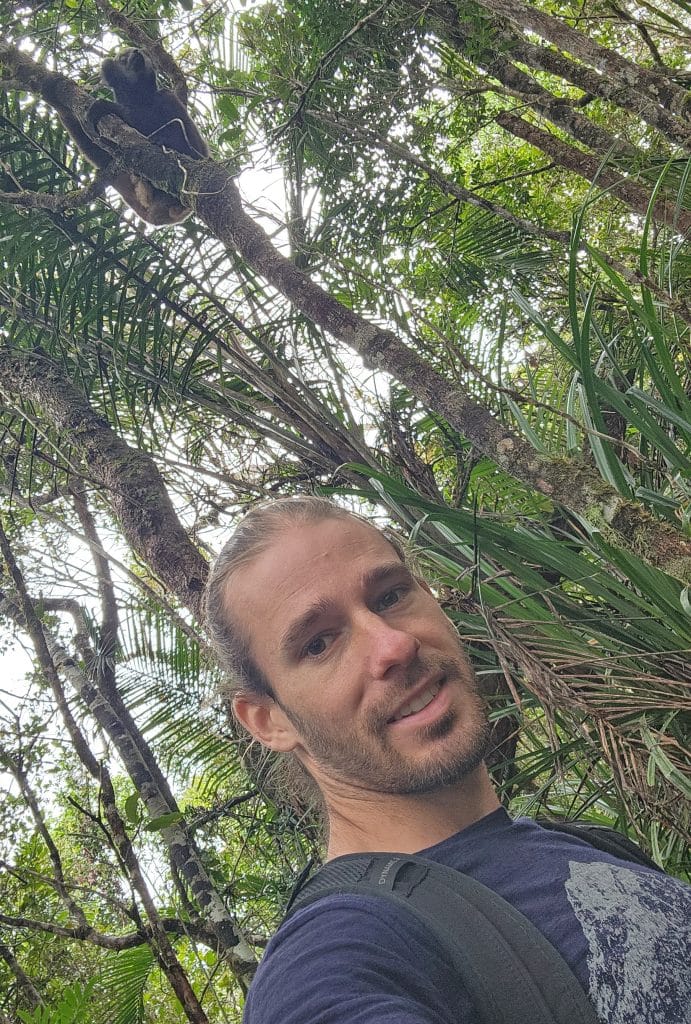
From Student to Conservationist: One Month That Changed My Perspective
By Silvestr Jochec
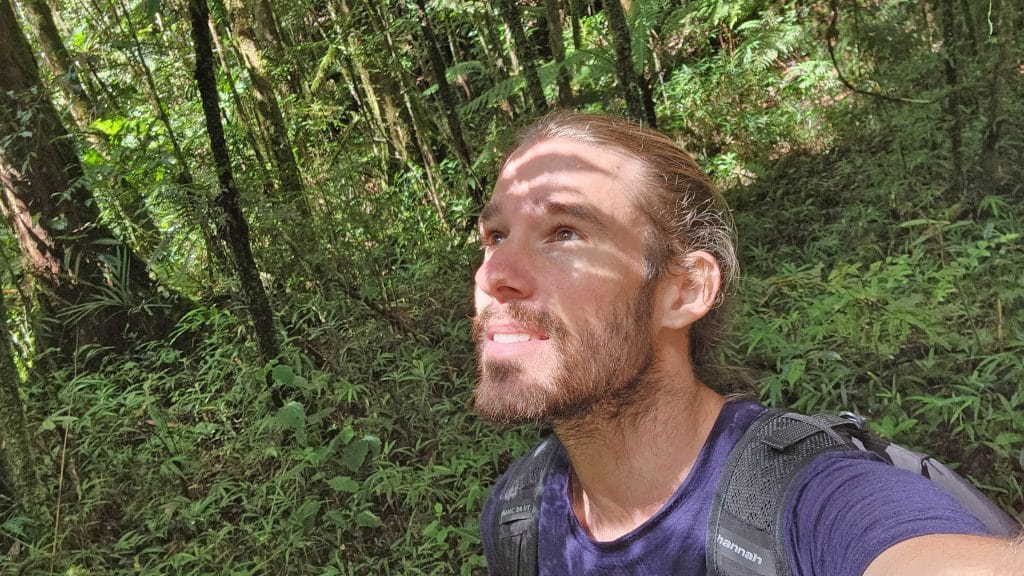
As I approached the end of my studies in Environmental Studies and International Development (at Palacký University Olomouc in Czech Republic), I wanted to experience conservation beyond the classroom. Rather than simply reading about conservation or restoration efforts, I wanted to contribute to them firsthand. That search led me to Wildlife Madagascar. WM offered me a combination of several activities – ranging from lemur monitoring and working in a tree nursery to community education in neighboring villages. Madagascar was an obvious choice for me. I was drawn by Madagascar’s extraordinary biodiversity and remarkable endemic wildlife, but the opportunity to gain practical conservation experience through a well-managed project played an equally important role in my decision.
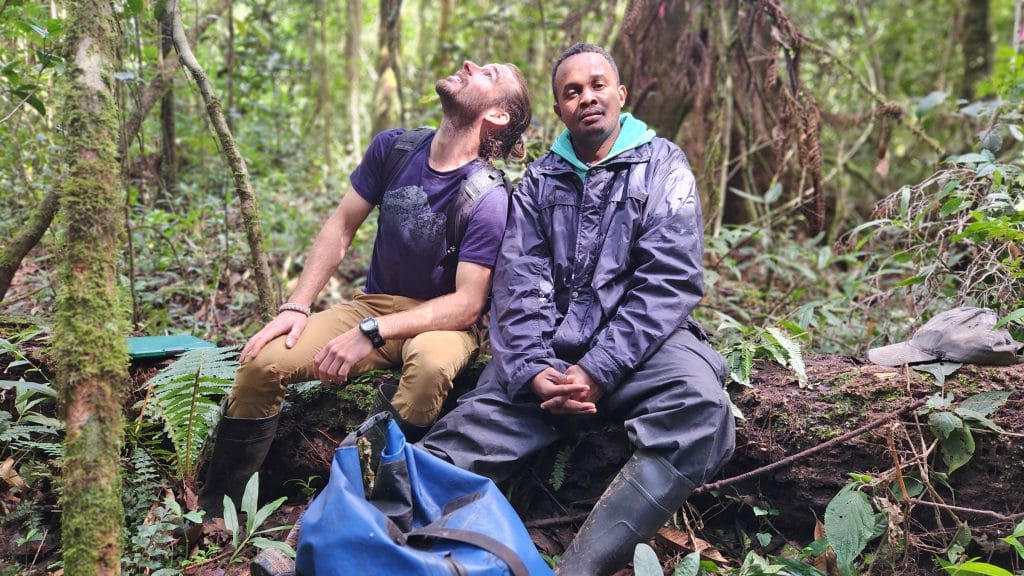
Beginning my internship alongside Ludino, one of Wildlife Madagascar’s experienced local field guides at Anjanaharibe-Sud Special Reserve.
I chose to complete my internship at Anjanaharibe-Sud Special Reserve, a montane rainforest in northeastern Madagascar. Of all the opportunities available through Wildlife Madagascar, lemur monitoring interested me the most, so I began my internship at the research camp deep within the forest.
The rainforest initially felt overwhelming. Everything looked unfamiliar, the terrain was challenging, and the forest canopy seemed almost impenetrable. Even when the guides pointed out a lemur, it often took me several minutes before I could actually find it. Overall, I was quite disoriented in the rainforest and often had no idea where we actually were. Over the course of 30 days, however, that changed significantly and I learned a great deal.
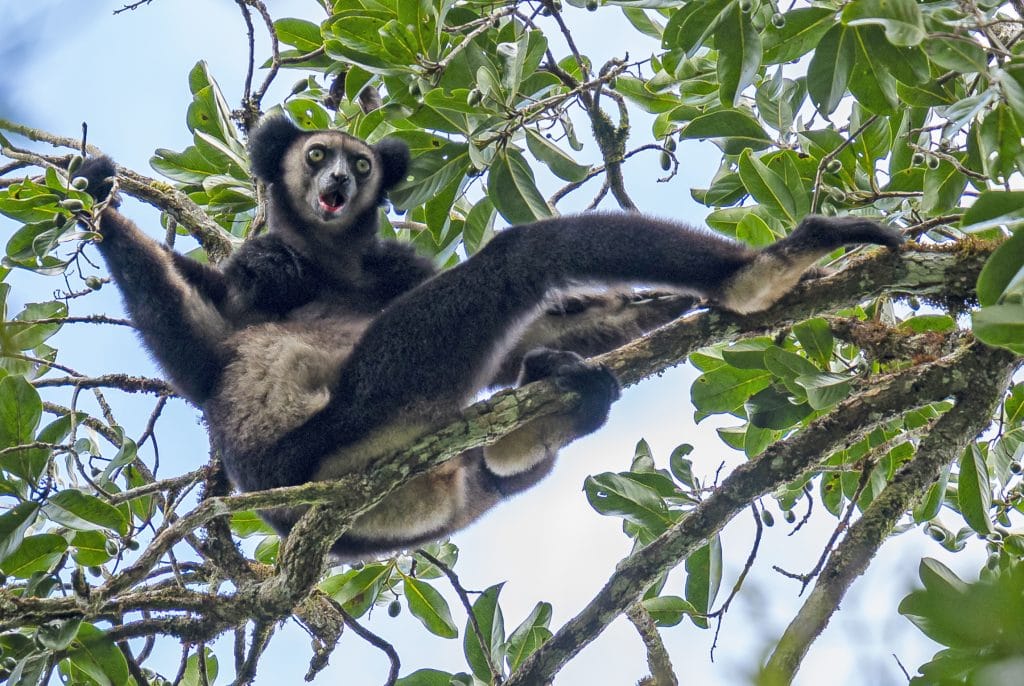
The haunting songs of the indri became a familiar sound during daily forest monitoring.
After a month in the field, I was able to distinguish individual lemurs within a single group, learned to track them effectively, and could even predict their behavior. I began to memorize specific spots and trees where they feed or rest. Toward the end, it was immediately clear to me that when silky sifakas descend to the ground, they are most likely going to feed on the seeds of the vongo tree. Or when the typical song of the indri echoed through the forest, I could estimate which specific group it was based on the location and territory. These may seem like small observations, but to me they represented something much bigger. They showed how much I had learned from both the forest and the people who know it best.

Sharing a well-earned morning break monitoring lemurs in the rainforest.
The guides were an invaluable source of support throughout my effort to learn. They were always willing to answer my many questions and helped me understand not only the lemurs, but also the forest itself. Their deep knowledge, gained through years of experience in the rainforest, was remarkable, and they generously shared it with me every day. Their patience and encouragement made me feel like part of the team rather than simply a visitor. Beyond teaching me field techniques, I think we also formed genuine personal connections, which made my time at camp especially meaningful. Looking back, many of the lessons I will carry forward came directly from their mentorship. By the end of my stay, I didn’t want to leave the rainforest, but it was time to move on to the next stage of my internship.
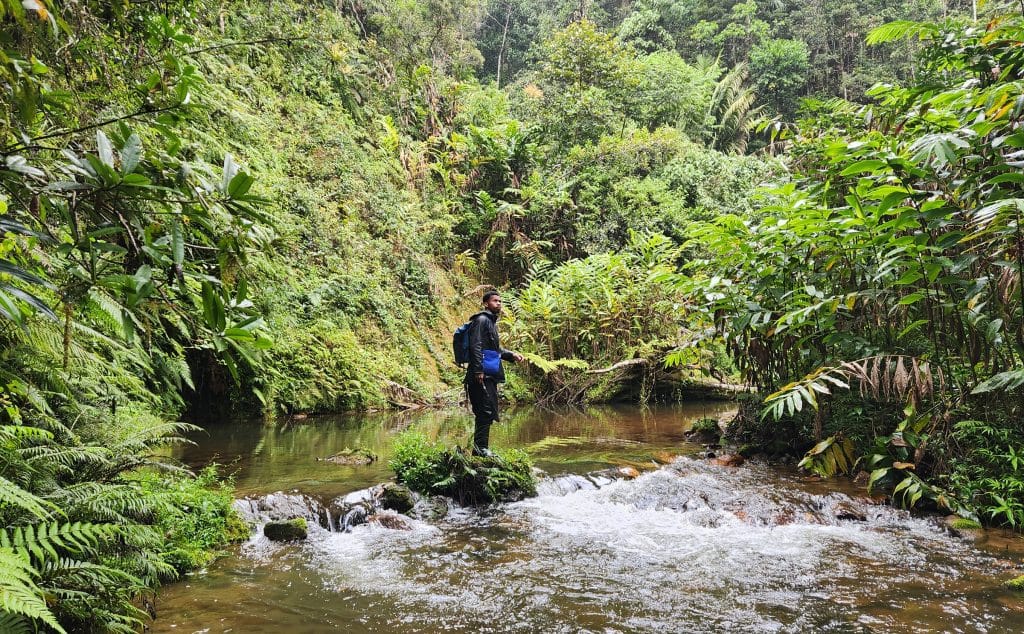
The spectacular rainforest landscape of Anjanaharibe-Sud Special Reserve in northeastern Madagascar
I then spent some time with Vanessa, who leads community outreach in the villages surrounding the reserve. Through her work, I gained valuable insight into another essential aspect of Wildlife Madagascar’s conservation efforts: environmental education. By bringing books into local schools, children had the opportunity to improve their reading skills while learning about the unique wildlife and forests around them, with many of the stories focusing on Madagascar’s lemurs and other native species. Spending time in the classrooms reminded me that conservation extends far beyond protecting forests and wildlife. Lasting conservation depends on inspiring the next generation to value their natural heritage, and it was rewarding to see the curiosity and excitement these books sparked among the students.
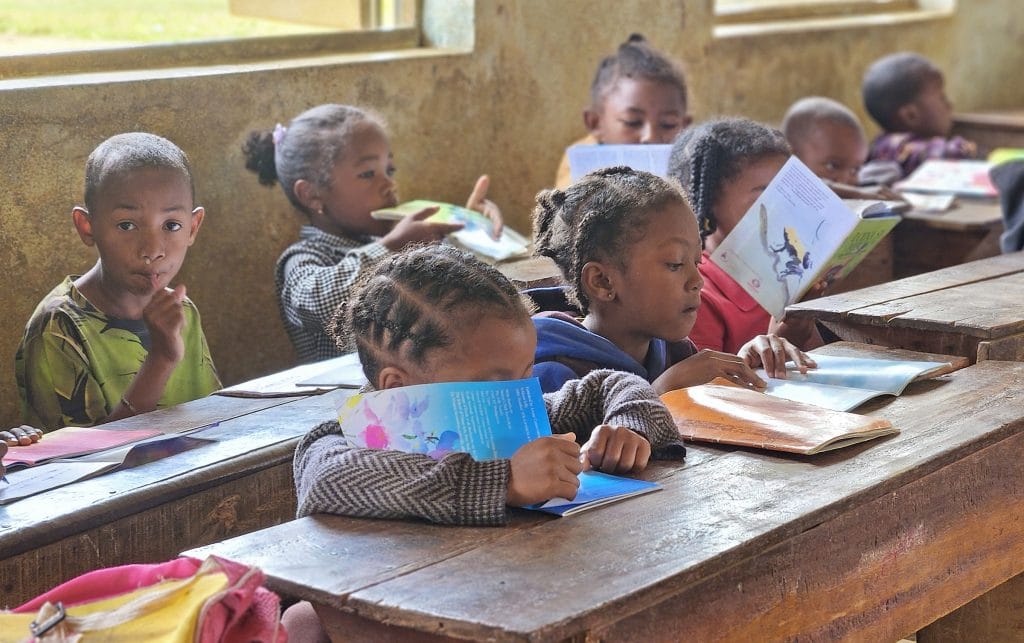
Wildlife Madagascar’s environmental education program helps local students discover the importance of Madagascar’s unique wildlife and forests through reading.
I also visited the tree nursery, where Mamy and the reforestation team grows and plants trees typical for this region, many of which are endemic. I visited the nursery twice: first before heading into the rainforest, and then after my return. On my first visit, I planted a few seeds without really knowing what they were at the time. When I returned a month later, however, I knew very well what I had actually planted. Seeing seedlings that I had planted only weeks earlier beginning to grow was surprisingly meaningful. It reminded me that conservation is often built through many small actions that, over time, create lasting change. Furthermore, the local staff willingly showed me around and explained everything they grow in the nursery. Since I am very interested in trees, it was immensely enriching for me.
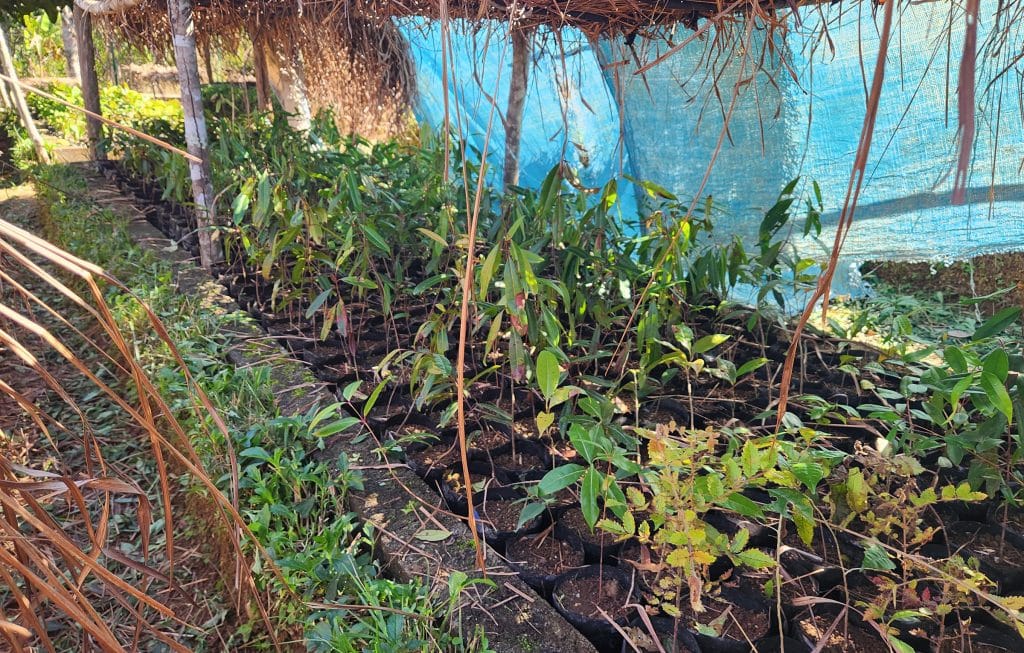
Native seedlings growing in Wildlife Madagascar’s nursery will one day help restore degraded forest habitat around the reserve.
Overall, I found my internship with Wildlife Madagascar to be an incredibly rewarding experience. I learned so much, from lemur monitoring methods and lemur behavior to understanding how the local forest ecosystem functions, how it can be protected and restored, the importance of community education, and sustainable alternatives that help reduce pressure on the environment. At the same time, I gained a close-up view of how a successful conservation organization operates in practice. More importantly, I came to appreciate that effective conservation depends not only on protecting wildlife, but also on the dedication of local communities and the passionate people working alongside them every day. I leave Madagascar with new knowledge, valuable friendships, and even greater motivation to continue building a career in conservation.
Thank you, Wildlife Madagascar, for this unforgettable opportunity.