
When Lemurs Take to the Eucalyptus: Surprising Sightings at La Mananara
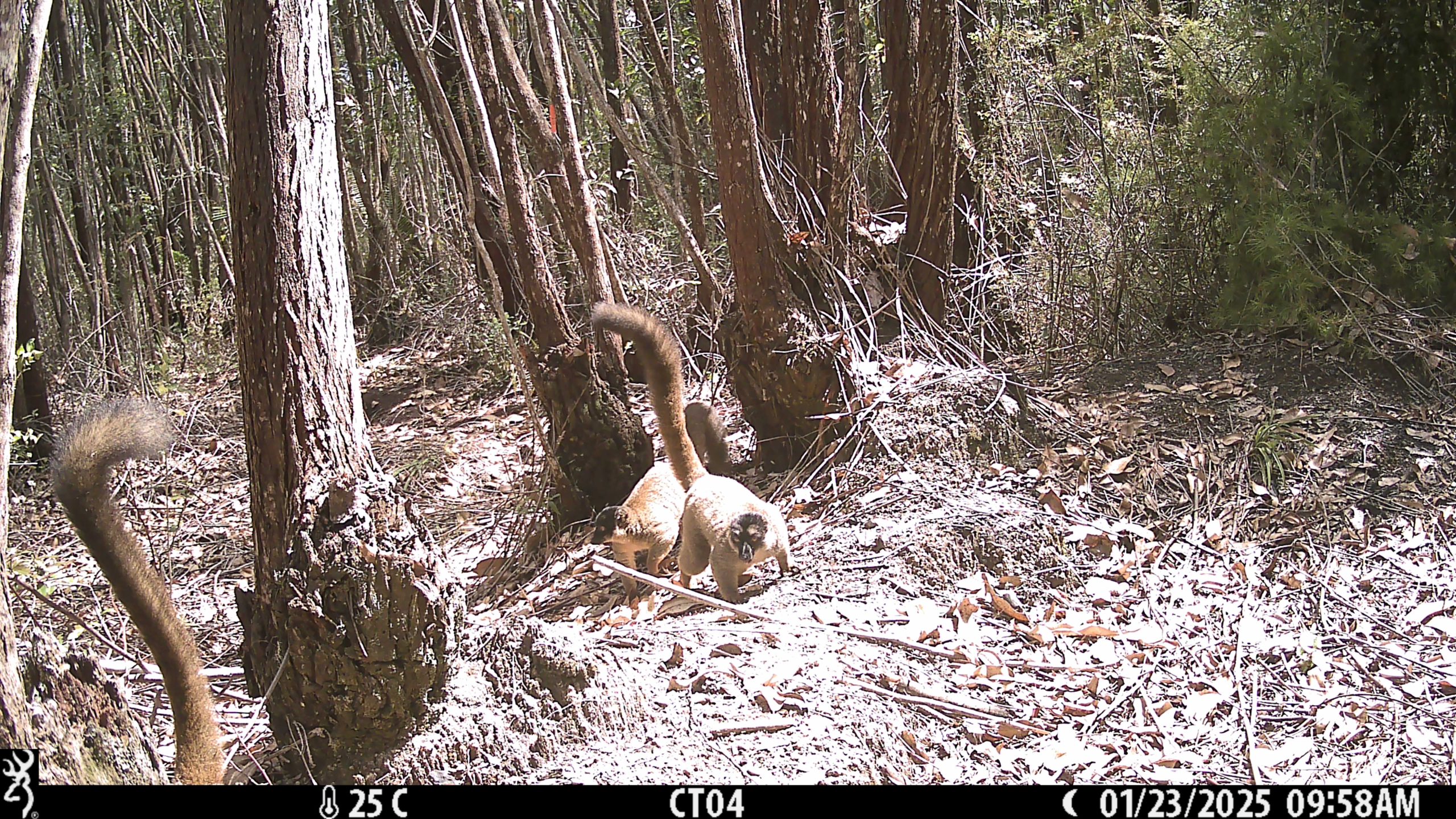
Not all of Madagascar’s lemurs spend all their time in native forest. At La Mananara, our Wildlife Madagascar team has occasionally observed lemurs using the Eucalyptus plantations surrounding the Anjozorobe-Angavo Protected Area.
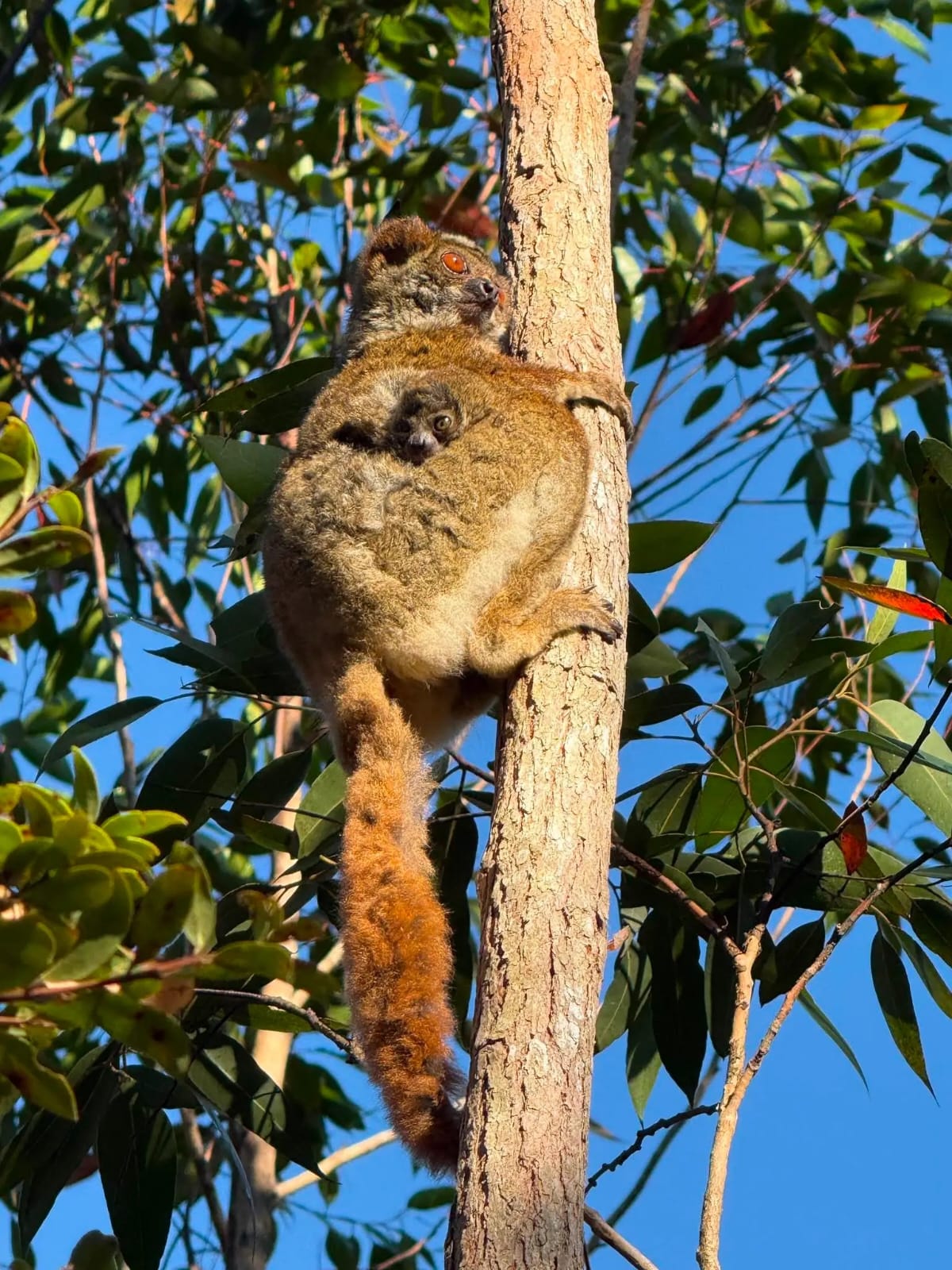
So far, we have recorded five species using these plantations:
- Goodman’s mouse lemur (Microcebus lehilahytsara)
- Gray bamboo lemur (Hapalemur griseus)
- Common brown lemur (Eulemur fulvus)
- Eastern woolly lemur (Avahi laniger)
- Diademed sifaka (Propithecus diadema)
Want to learn more about any of these species? Visit our full Animals page to explore profiles of the mammals, birds, reptiles, amphibians, and insects that call Madagascar home.
These five species are part of the at least 10 lemur species known to inhabit La Mananara and the wider Anjozorobe-Angavo landscape, a privately protected forest that has safeguarded habitat for more than a century. The diademed sifaka is especially notable: it is one of Madagascar’s two largest living lemur species and a major draw for visitors to the region.
Why Eucalyptus, of All Trees?
These observations are particularly interesting because Eucalyptus is an introduced tree, not part of Madagascar’s native flora. Around La Mananara, the remaining natural forest is bordered by non-native Eucalyptus and Pinus plantations, a landscape pattern common across the eastern humid forest zone. Yet despite being foreign to the island, Eucalyptus stands can offer vertical structure, canopy cover, and additional habitat that some lemurs are able to use, especially where they sit close to native forest edges.
Previous research has similarly documented several lemur species using Eucalyptus plantations elsewhere in Madagascar, highlighting the ecological flexibility of these animals in human-modified landscapes. That flexibility matters more than ever: with 98% of lemur species now threatened with extinction, lemurs are not only the most endangered group of primates on the planet, they are considered the most endangered mammal group in the world.
Plantations Aren’t a Substitute, But They Are Part of the Picture
While Eucalyptus plantations cannot replace Madagascar’s native forests, their use by multiple lemur species highlights the resourcefulness of these animals and raises an important conservation question: how can modified habitats help lemurs navigate increasingly fragmented landscapes?
It’s a question Wildlife Madagascar is actively working on. Our reforestation program restores native forest and builds corridors that reconnect fragmented habitat, allowing lemurs to move safely between forest patches in search of food, mates, and shelter. At the same time, we recognize that local communities need reliable sources of fuel wood and building materials, which is why part of our reforestation strategy includes small, carefully sited plantations of fast-growing, non-native species like acacia and eucalyptus. Done thoughtfully, this approach can ease pressure on native forest while still leaving room for wildlife to make use of the wider landscape, exactly the kind of behavior our team is now observing in the field.
Every Sighting Adds to the Story
Observations like these underscore why consistent, on-the-ground monitoring matters. Each new record of a lemur in an unexpected habitat helps our researchers better understand how species are adapting, and where conservation efforts can have the greatest impact for wildlife and people alike.