
Madagascar: Where Family Planning and Conservation Meet
By Christina B. Edelman, MPH, WHNP, CNM
As a nurse practitioner and certified nurse-midwife, I had the great privilege of traveling to Madagascar this summer to help evaluate family planning services offered by one of Wildlife Madagascar’s (WM) colleagues, the Lemur Conservation Foundation (LCF). As LCF continues to expand its conservation work, they are looking for additional support to meet the growing need for family planning services in the communities they serve.
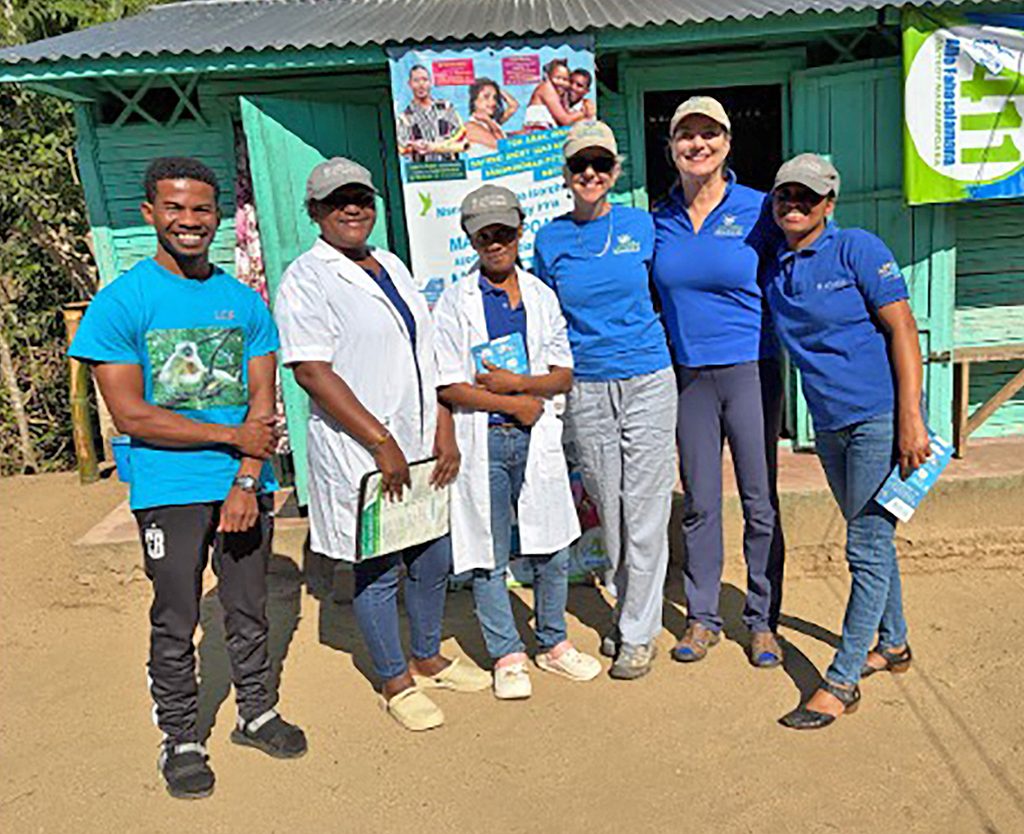
You may be wondering, why would WM be involved in family planning? The answer is a model called Population, Health, and Environment (PHE). PHE integrates conservation, community health, and family planning into one approach.The idea is simple but powerful: when women and families have access to education and voluntary family planning services, they have greater ability to decide if and when they want to have children and how many children they want to have. At the same time, communities receive education about conservation, deforestation, and agricultural practices. Together, these efforts can help reduce pressure on household resources and, over time, lessen demands on the surrounding forests and wildlife.
Our first step was to observe how LCF was already providing these services. LCF has developed a successful program, particularly in northern Madagascar. They currently have sites in both the ASSR and Marojejy Forest areas, working in seven communities, with plans to expand even further. Last year alone, they provided services to more than 68 villages and 6,076 people.
LCF would like WM to take on the ASSR region so that they can expand their work farther into the SAVA region. They work in partnership with Marie Stopes International (MSI), which provides trained nurses to deliver family planning services. We wanted to understand how the program worked—not just on paper, but operationally and in the field. So we went into the villages.
Our first visit was to the village of Andranomifotitra, outside the Marojejy Forest. Each time the team comes to a village, they spend three days there. The first day is for travel, set up, and dialogue with village leaders. The second day is for counseling and treatment day and the third day is to clean up, review the work completed, and return home. We arrived for day two.
There, the LCF team and MSI nurses organized a community program where women and men came together to learn about contraception and conservation. Once the group counseling was completed, the MSI nurses began seeing women individually. They discussed the available contraceptive methods, took a health history, and performed a brief physical assessment before providing care.
Having worked in a designated family planning clinic myself, I was able to recognize the skill and professionalism of these nurses immediately. They worked with care, compassion, and confidence despite having limited resources.
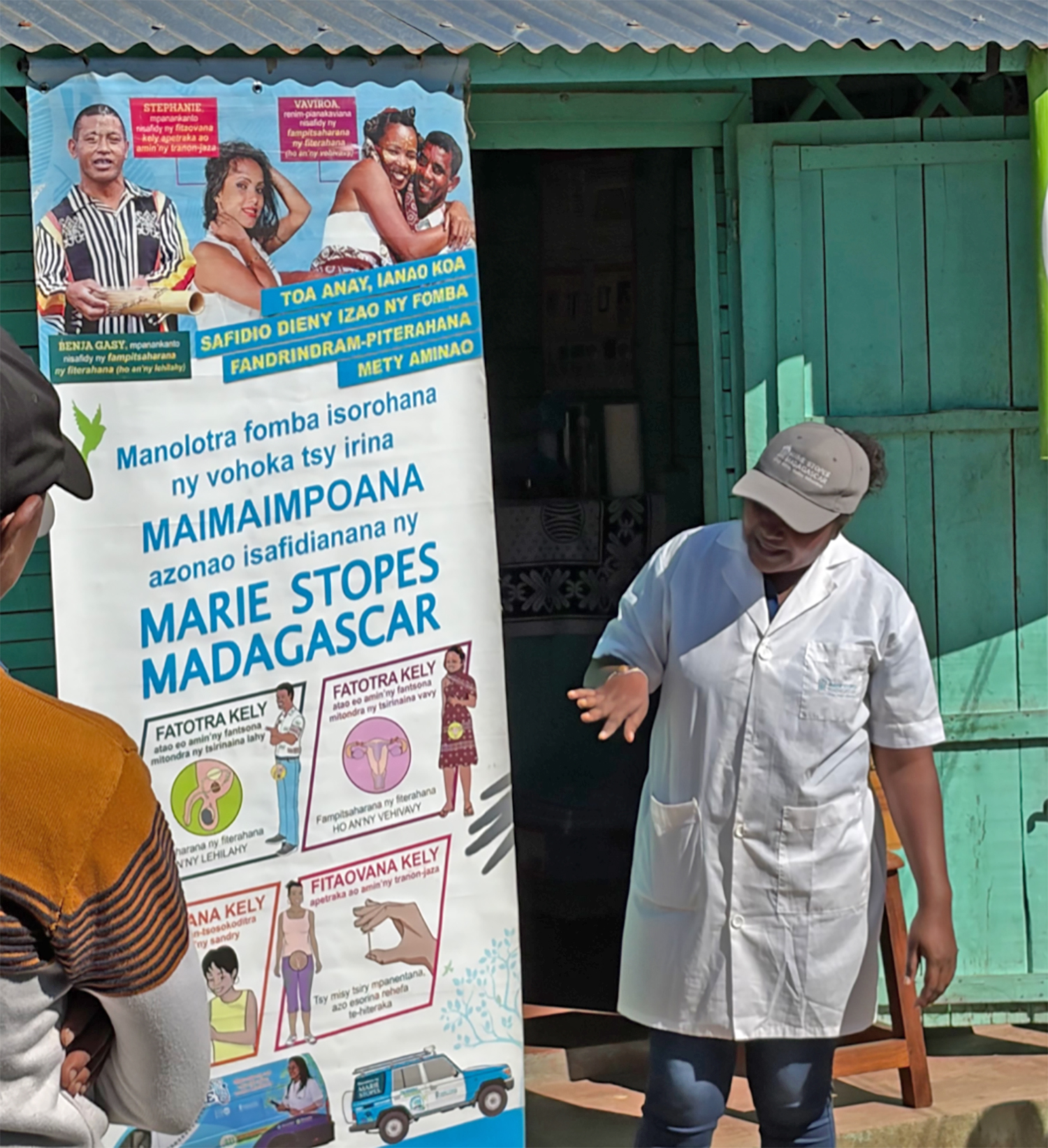
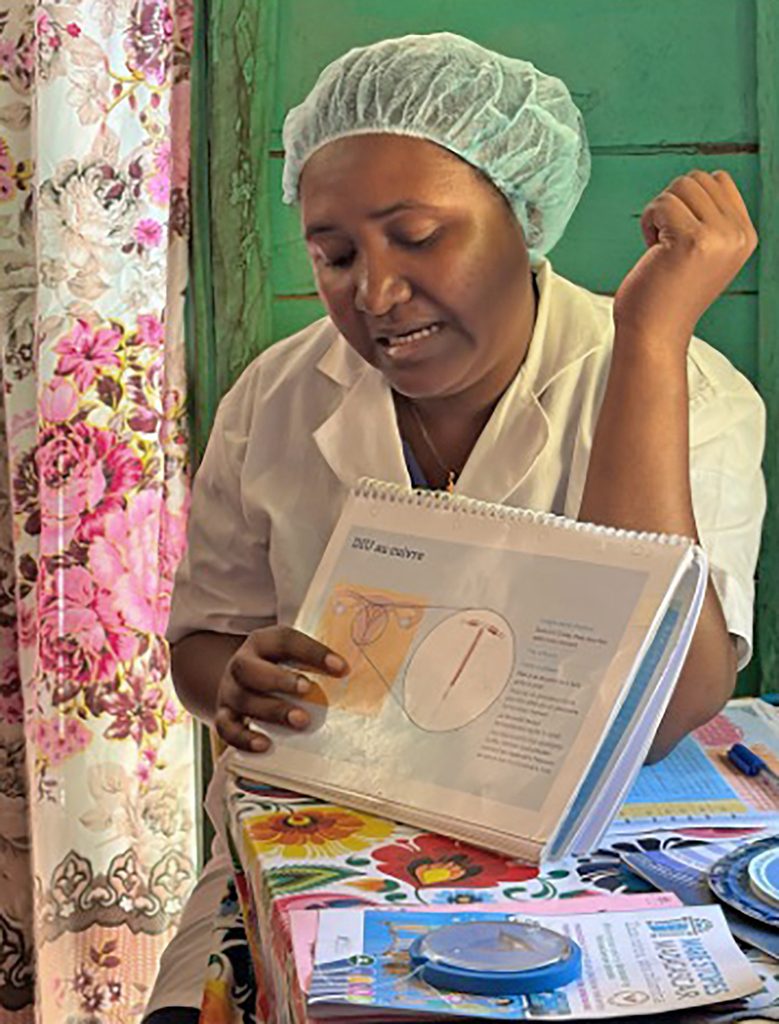
The nurses provide two long-acting reversible contraceptive methods: the contraceptive implant and the copper intrauterine device (IUD). The implant, known locally as Implanon, is a small rod placed under the skin of the upper arm and provides contraception for several years. The copper IUD is placed in the uterus and provides long-term contraception. In the United States, the implant is commonly known as Nexplanon, while copper IUDs are also widely used. Both are highly effective, reversible methods that allow women to choose contraception that does not require daily attention.
The MSI nurses are already trained nurses, having completed three years of nursing education. MSI provides an additional two weeks of specialized training so that they are comfortable performing these procedures. They also have physician supervision and undergo regular skills assessments to ensure that their knowledge and clinical skills remain current.
The nurses return to each village approximately every six months. These visits allow them to follow up with patients, address concerns, ensure that their contraceptive method continues to work well for them, and remove devices when requested or medically indicated.
Women are also counseled about possible side effects and when they should seek additional medical attention. Changes in menstrual bleeding are among the most common concerns with these long-acting contraceptive methods.
We traveled next to another village, Marovato, where we met with village leaders and government health workers. Together, we discussed the next visit by the LCF and MSI teams and made arrangements for the team to stay overnight. The team generally visits the community about a month ahead of time to confirm the next date and give residents time to learn about the upcoming services. Information is shared through posters, national broadcasts, and local nurses. This advance planning is essential when working in remote communities. Rather than asking women to travel long distances to access health care, the health care comes directly to them.
For our final meeting, we traveled to Antananarivo, the capital of Madagascar, to meet with MSI and discuss the possibility of formally joining our teams through a Memorandum of Understanding (MOU). MSI has been involved in PHE programs since 2009, when they first partnered with another non-governmental organization, Blue Ventures. Their work has focused on underserved communities, with an emphasis on giving people access to information, health care, and choices.
There are, however, significant challenges. International organizations that have traditionally provided resources have reduced their support, forcing MSI to significantly reduce some of its services. They also face the enormous logistical challenge of getting nurses to travel to extremely remote communities. But the need remains great. And despite these obstacles, they continue to provide services to the best of their ability.
There are many challenges to providing women and families with access to family planning, particularly in remote areas. But during our time in Madagascar, the need was impossible to miss. We met women who already had four, five, or six children and who were seeking options for their future. Family planning is about much more than contraception. It is about giving women the knowledge, resources, and ability to make informed decisions about their own lives and the lives of their families. In Madagascar, those decisions are also connected to something much larger.
When family planning is combined with conservation education, communities can begin to address the interconnected challenges of health, poverty, food security, and environmental sustainability. When women can decide when and whether to have another child, families may have greater ability to plan for their children’s needs and manage limited household resources. And when those efforts are combined with conservation education, communities can better understand the connection between their livelihoods, their health, and the forests and wildlife that surround them.
I came away from Madagascar with an even greater appreciation for the nurses, community health workers, and conservationists doing this work under challenging circumstances. They travel long distances. They work with limited resources. They sleep in remote villages. And they bring essential health services directly to people who might otherwise have little access to them. Most importantly, they provide something fundamental: Choice. And sometimes, giving a woman the knowledge and ability to make decisions about her own health and her family’s future can be the beginning of something much bigger—for her family, her community, and the environment around her.