The Search for the Red Ruffed Lemur
By Matthew McGee
Previously on “Matt’s Field Adventures”: I completed the second field season of my PhD at Anjanaharibe-Sud Special Reserve (ASSR), which had started to feel like a second home. Over those two years, I survived a coup, a cyclone, a band of illegal miners, a sprained ankle, a twisted knee, and more rice than I had consumed in the prior few decades of my life. I had started to figure out how to conduct moderately successful research. When I left ASSR in November 2025, however, the future was murky: I didn’t know if I would be back for a third field season with so many other responsibilities demanding my attention.
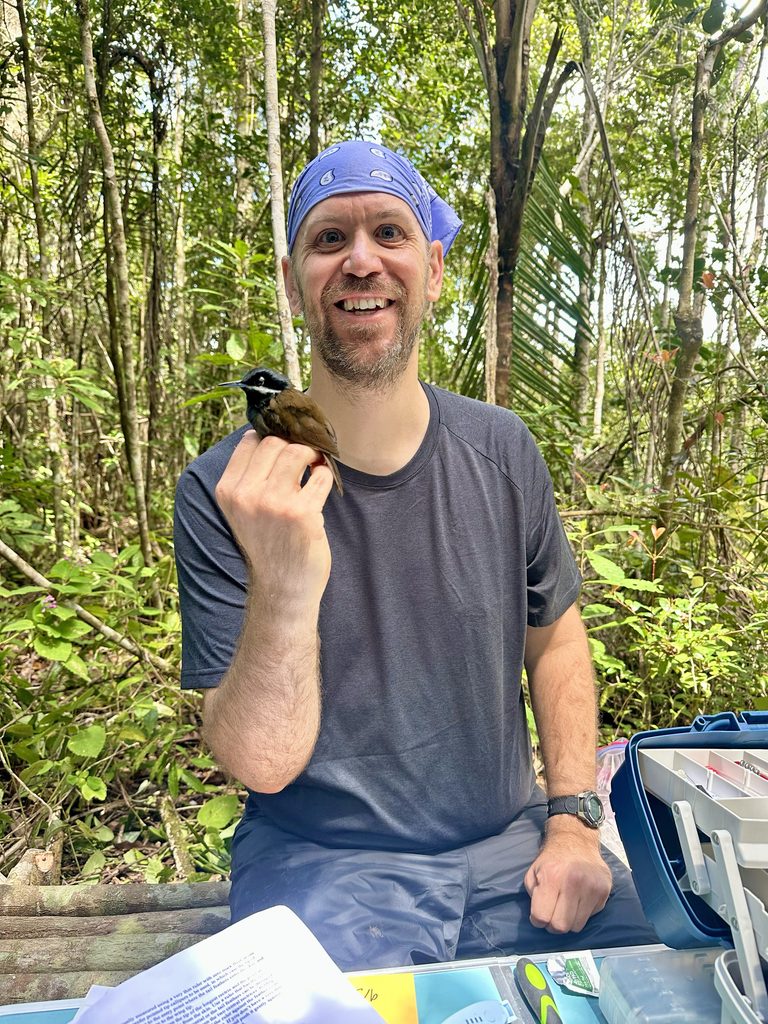
Given that I am writing another blog post—my fifth (!) for Wildlife Madagascar—you have undoubtedly realized that I did indeed return to ASSR for field season #3. The field season is still underway, and my team continues to set mist nets for birds along the same elevation gradient I’ve studied for three years. They collect data on each bird before releasing it safely. But we all have to step back from fieldwork at some point, at least a little, and that time has finally come for me. A bittersweet transition, but one that feels right. I’m back in California now, but I still got to spend the first two months of the field season at ASSR, mostly at Camp Varecia, Wildlife Madagascar’s newest permanent research camp. Those two months were two of the most meaningful months of my career thus far, and that is a story that actually starts two years ago.
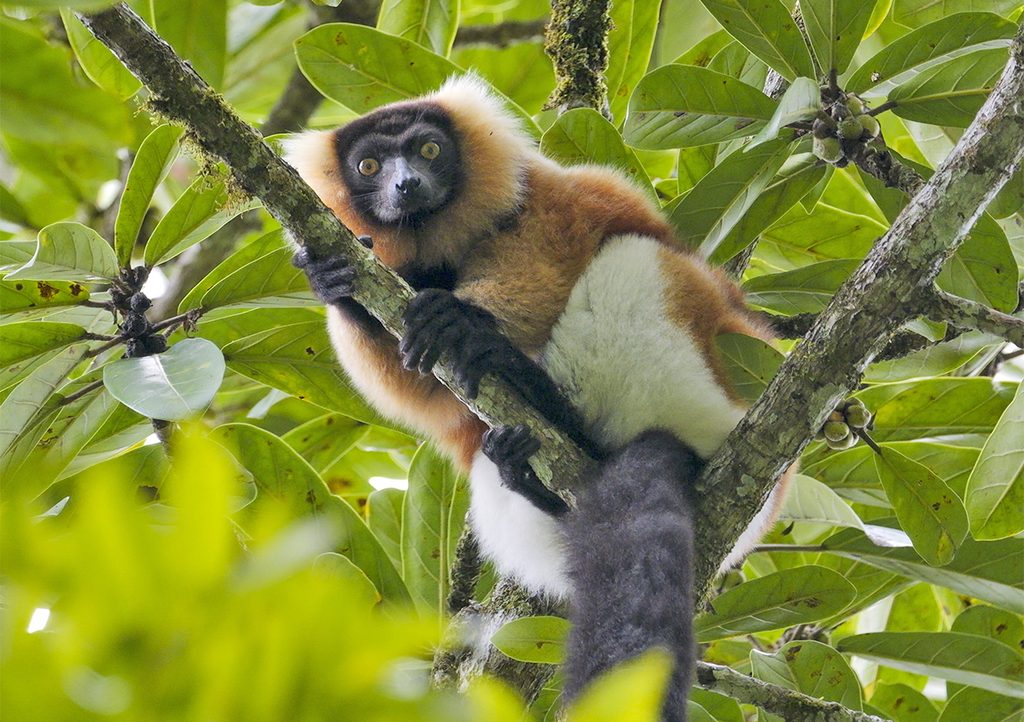
My dissertation is solely focused on birds, but I am surrounded by lemur-ologists. Maybe one day I’ll be more of a lemur-ologist myself, but I’m still a novice, and I knew even less when I first started my fieldwork in 2024. But I knew which lemurs were present in ASSR, and I knew one that wasn’t: Varecia rubra, the red ruffed lemur. At least, not officially. There were rumors, suspicions, unconfirmed reports, but never any documentation. It was all so intriguing. As someone with ADHD, there’s nothing I love more than a side quest, and I especially love finding things, a skill that I’ve honed over a lifetime of losing my keys, my phone, and my ability to focus. Before I started my field season, I told everyone—Dr. Onja Razafindratsima (my advisor at UC Berkeley), Dr. Tim Eppley (my primary contact at Wildlife Madagascar and now a dissertation committee member), and all of my labmates—that I would try to find Varecia while I was there. Did I know anything about them? Not really. Did I know what they looked like? Red, lemur-shaped, assumedly a ruff of some sort. But it sounded like a fun and interesting way to spend some of my time.
We started looking in July. It was never one of our primary goals, but we were in the forest a lot, in places with few documented surveys, so we always kept an eye and an ear out. We found nothing the first month, the second month, the third month. We set up a site in the southwest, where red ruffed lemurs seemed most likely to occur, and still nothing. By mid-October it seemed like nothing more than a fun daydream. Maybe they weren’t really there, and if they were, it didn’t seem like we would find them. That’s how reality goes sometimes.
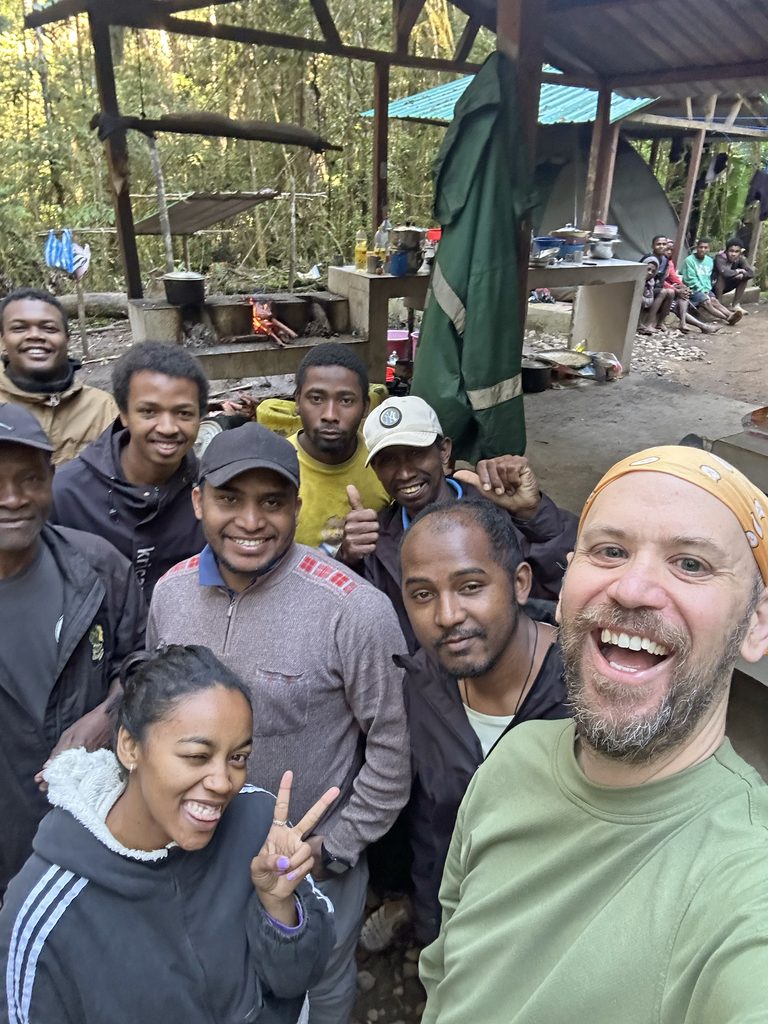
The rumor floated into camp as October was slipping away. A guide from Camp Indri named Laminjaka talked to my team when they crossed paths, and he said he’d seen red ruffed lemurs when he hiked to Camp Indri from his home in Amponaomby, a village near ASSR’s southeastern border. We sat in camp and stared at the reserve map, trying to figure out exactly where he had seen them, and then I excitedly hiked up the ridge for phone signal so I could spam everyone I knew with text messages. Tim was surprised by the location, but thought it was possible. Delaïd Rasamisoa, ASSR’s program manager, agreed. But there still wasn’t any proof. Someone had to go there, I thought, and I looked around for who it would be. For all my daydreaming, I didn’t think it would be me.
At that point, I was four months into my field season, with one final expedition looming ahead of me. I had been worn down physically and mentally, drifting into a malaise from the disappointments of my first field season mixed with homesickness. I didn’t have the time or the energy or, really, the courage for a wild expedition to the southeast. Everyone would understand why I didn’t go. Someone else would go eventually. But eventually seemed too far away, and when I looked around, I didn’t see anyone else. I thought about all the scientists that I admired, and they I knew they would find a way to make it work. They would step up. Somewhere deep down inside me, I wrestled with an uncomfortable truth: I hadn’t stepped up enough in my first field season. I had come all this way just to shrink when I needed to stand. Is that who I wanted to be?
I found the time: I could squeeze three days out of my schedule. I found additional justification: the elevation in the rumored area was more representative of lower elevations than the camp I was currently using. And I found the support: Onja and Tim backed my decision, Delaïd organized everything, and Laminjaka was ready to meet me in Amponaomby. And most importantly, Niaina was ready to go with me. Without Niaina, I never would have had the courage. On October 30th, 2024, Niaina and I took the long motorbike ride to Amponaomby. Three days wasn’t a lot of time to search for the red ruffed lemurs, but I had a wild conviction that we could do it.
We did it in two.
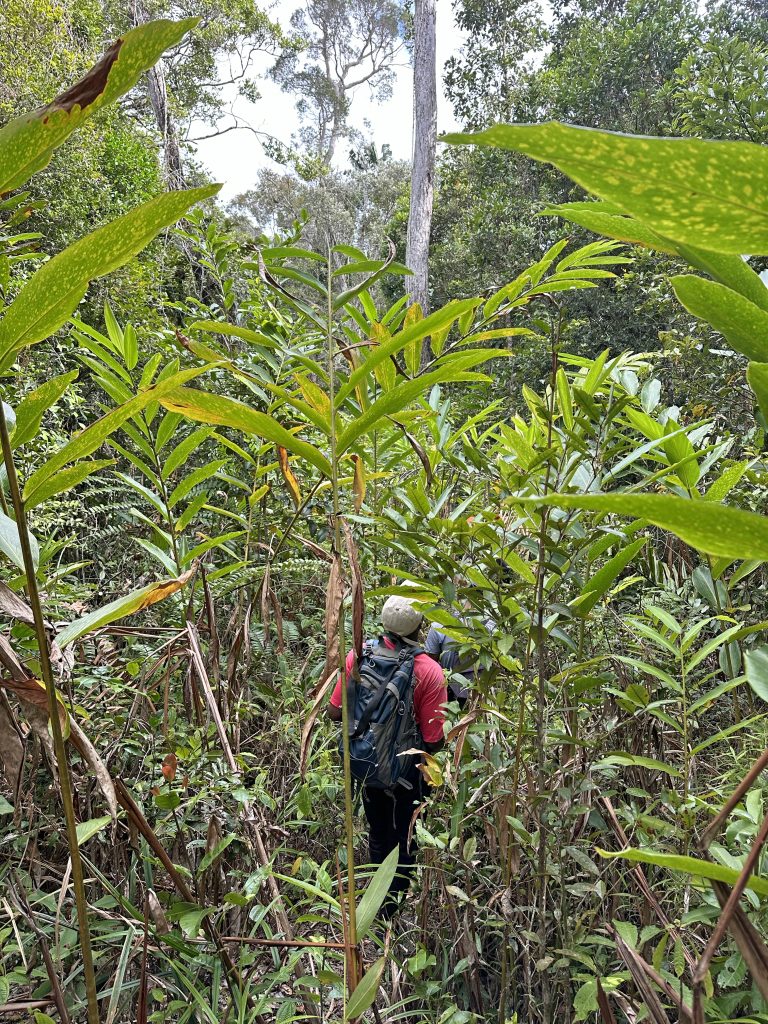
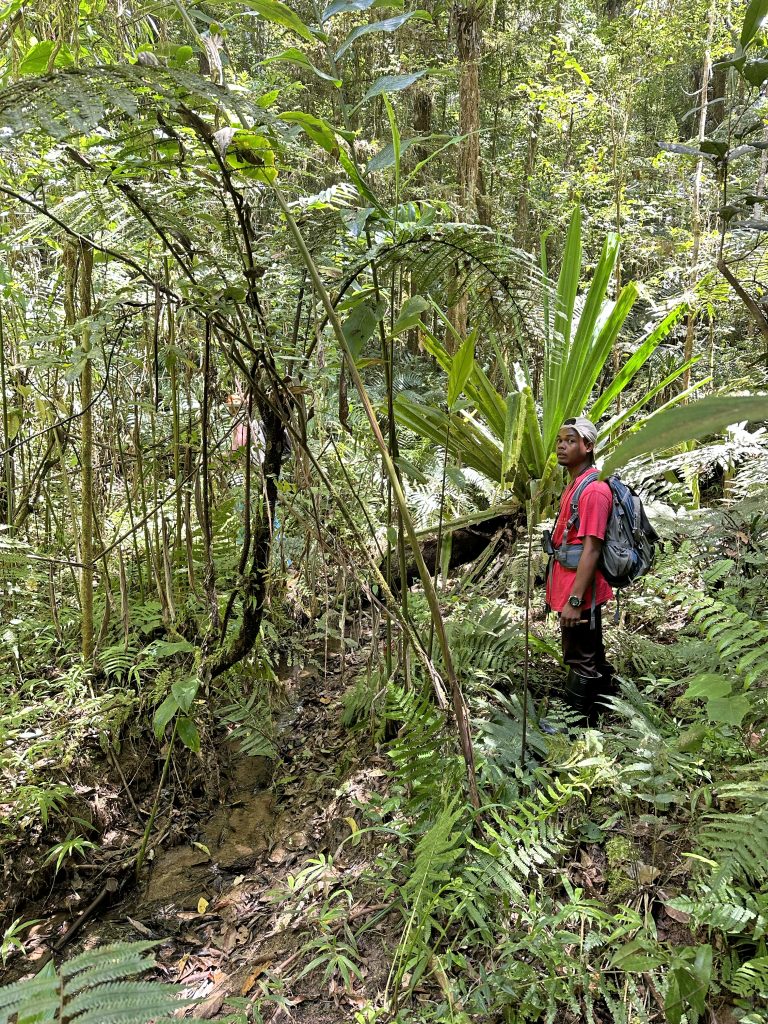
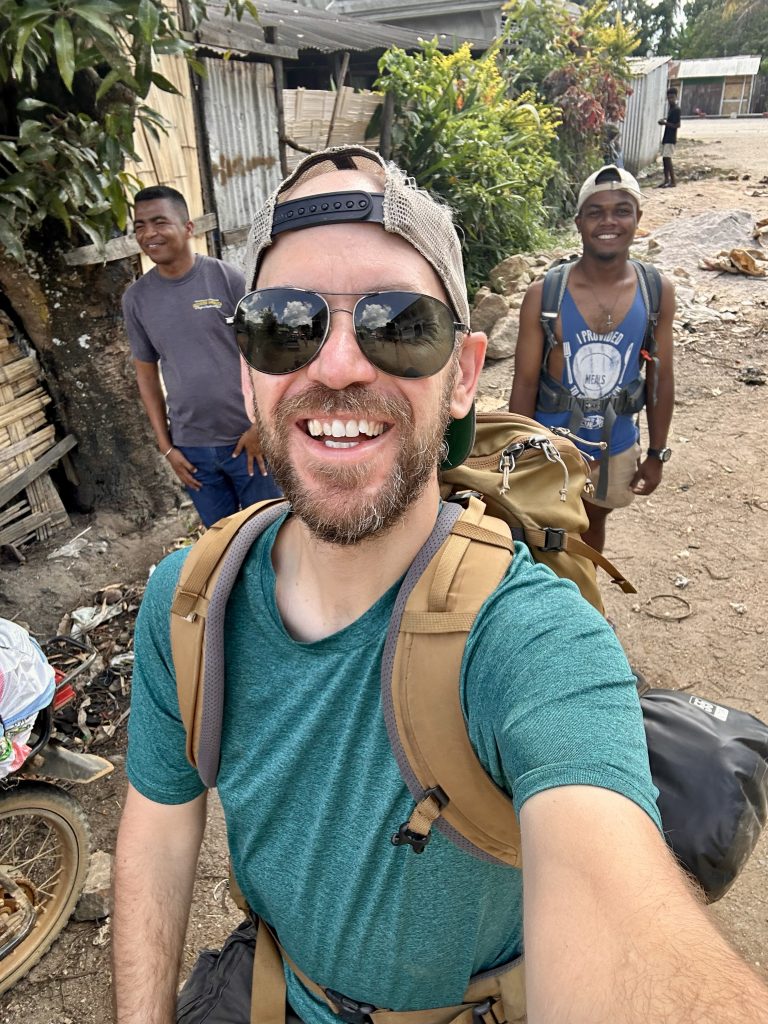 Snapshots from the search
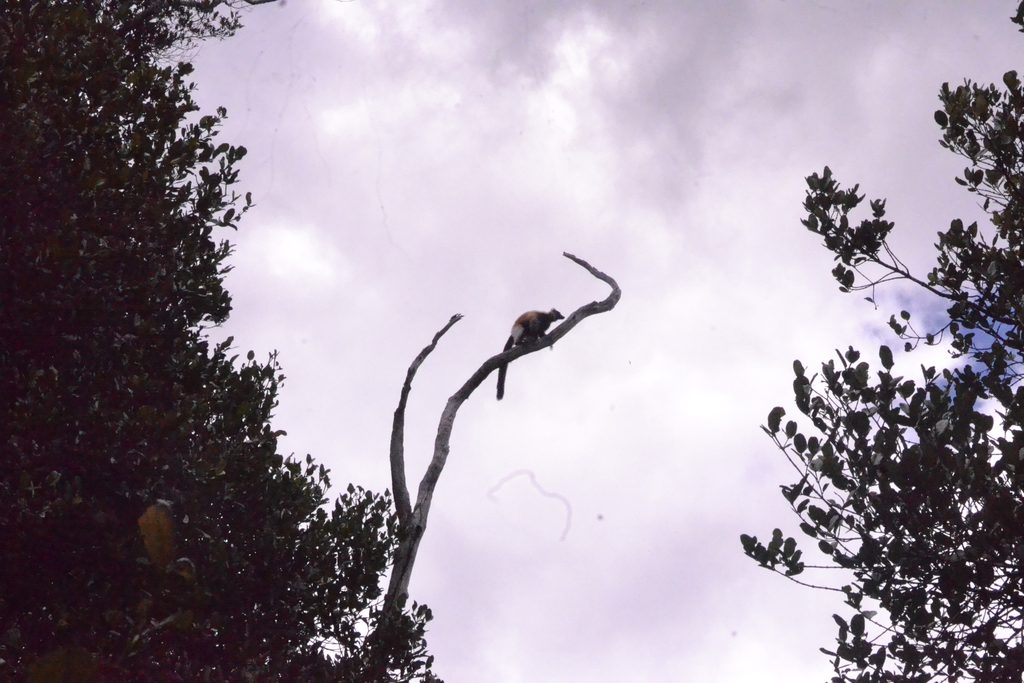
I’ll never forget the moment it happened. I was standing in a clearing with my binoculars and Onja’s camera hanging around my neck. I remember hearing a noise in the trees and knowing it was a lemur, knowing that it was indeed the red ruffed lemur, even before Niaina yelled at me from his post 50 meters away. I knew I would have only seconds. No time for binoculars, only time to click the camera and pray. The red ruffed jumped onto a branch on the clearing, paused for a second, then jumped into the trees on the other side. It was the only glimpse I had over the entire three days.
Looking back now, it feels like a miracle. It’s also, I think, one of the best decisions I’ve ever made. So much good has flowed from this. For me, this goes beyond the Varecia—because it actually starts before we even found them. On the first day we were in the southeast, hiking up and down ridges, finding indri and nuthatch vangas and scaly ground-rollers but nary a red ruffed lemur, Niaina and I had a conversation about the forest. You are surrounded by beauty with every step you take in ASSR, but something about this particular spot had instantly grabbed both of us. And while the elevational range was ideal for my new study site, we also agreed that wasn’t enough. We needed this to be a permanent research camp. I told Niaina that I wanted us to band birds there. It was a wild idea that seemingly sprang from nowhere but the stream running beside us.
A lot has happened since that conversation, mostly hard work from other people. Niaina and I wrote a manuscript about the sighting. I got the email that the manuscript had been accepted in the International Journal of Primatology while I was lying in my tent at Camp Varecia in September, a beautiful moment of serendipity, or maybe even kismet. I told Niaina early the next morning, when we were opening the mist nets for our new bird banding project that we had just started at Camp Varecia. It could have felt like a culmination, but it felt more like a beginning instead. And maybe that will be the story I tell next.